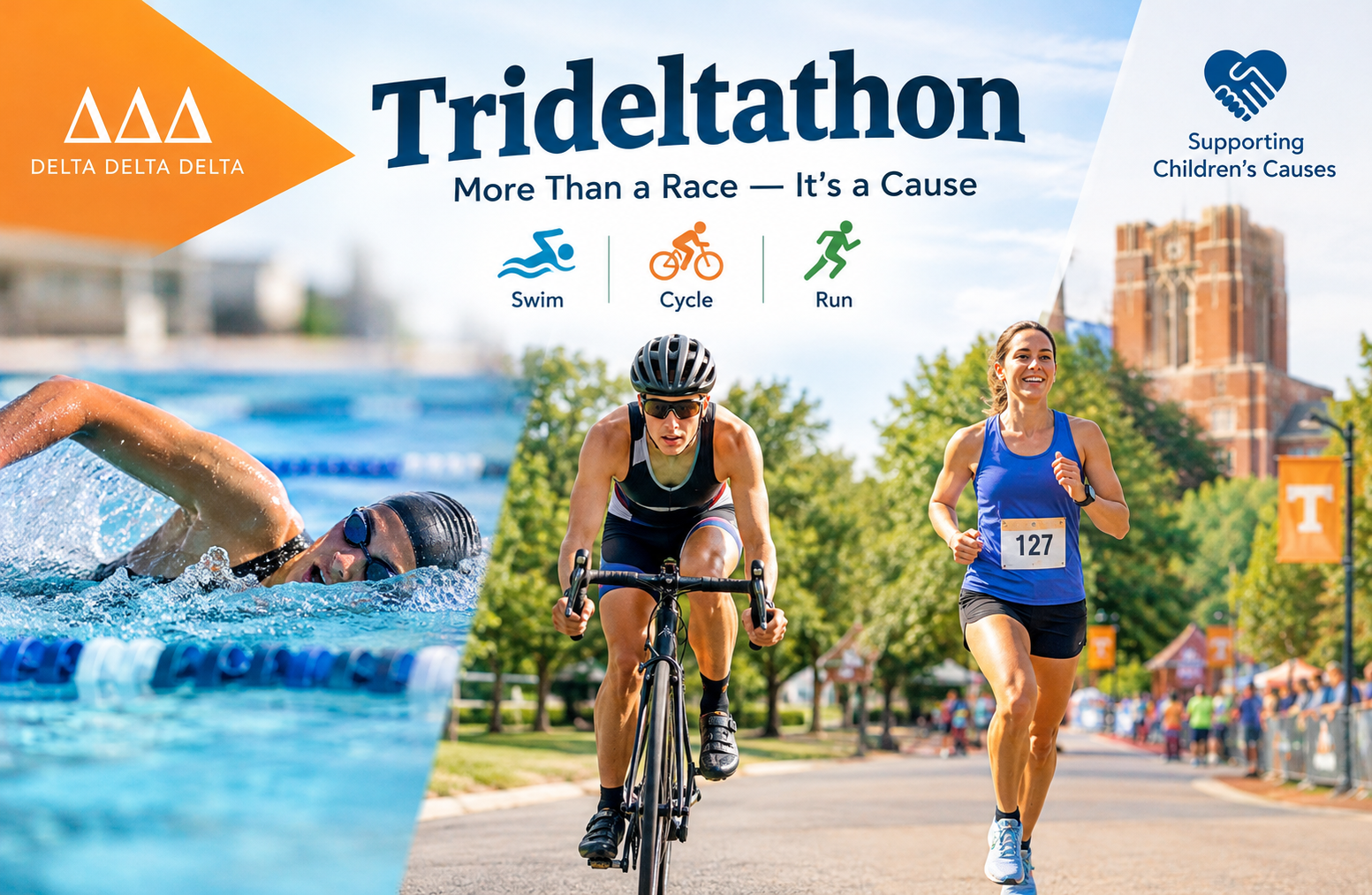
Trideltathon: History, Race Format, Charity, and Its Legacy
The trideltathon is a name associated with a distinctive charity sporting event in Knoxville, Tennessee, connected with the University of Tennessee and the Delta Delta Delta sorority, commonly known as Tri Delta. Historically, the event brought swimming, cycling, and running together in a pool-based triathlon that welcomed students, local athletes, volunteers, and community supporters. Its identity was shaped by two main ideas: physical activity and charitable service. However, there is an important detail for anyone researching the event today: more recent information refers to a related 5K running event called TriDeltaRUN, which differs from the original three-sport competition.
Understanding this distinction helps explain why online descriptions of the event sometimes appear inconsistent. Older accounts discuss swim distances, cycling routes, and running stages, while newer listings focus on a standalone running race. Both are relevant to understanding the event’s broader history, but they should not be treated as identical competitions. This guide examines its meaning, origins, historic format, charitable purpose, participant experience, preparation requirements, and present-day relevance while distinguishing documented details from information that requires further confirmation.
What Is Trideltathon?
Trideltathon was a community-oriented triathlon associated with Delta Delta Delta and the University of Tennessee in Knoxville. Unlike a traditional road race, which focuses on running, the historic event combined three athletic disciplines: swimming, cycling, and running.
Its most distinctive feature was the swimming stage. Participants completed an indoor pool swim before moving to the cycling and running portions. This made the event different from many triathlons that begin in open water, such as a lake or ocean.
The event also had a charitable purpose. It brought athletic competition together with fundraising for children’s causes, including East Tennessee Children’s Hospital in historical event descriptions.
Rather than serving only experienced endurance athletes, the event offered a way for people with different levels of sporting experience to participate. Individual competitors could complete the full course, while relay arrangements provided another way for teams to share the challenge in editions where that option was available.
The name itself reflects its connection to Tri Delta and the triathlon format. Delta Delta Delta is a collegiate women’s fraternity, commonly called a sorority in the United States. The organization has a long-standing philanthropic connection with children’s health causes, although its national philanthropy and the beneficiaries of a specific local race should be understood separately.
In practical terms, the historic event represented three things:
- Multisport competition: Swimming, cycling, and running formed one combined challenge.
- Community participation: University students, athletes, volunteers, and local supporters helped create the event atmosphere.
- Charitable fundraising: The race connected physical activity with support for children’s causes.
These elements explain why the name remains relevant to people researching Knoxville sports history, university traditions, and community fundraising.
Trideltathon at a Glance
Historic location
Knoxville, Tennessee, in the University of Tennessee community.
Historic format
A pool-based triathlon combining swimming, cycling, and running.
Commonly documented historic distances
400-meter swim, approximately six-mile bicycle ride, and three-mile run.
Community purpose
Athletic participation, university involvement, and fundraising for children’s causes.
Related modern event
TriDeltaRUN, a 5K running event documented in more recent event listings.
These distances describe the historic triathlon format, not the newer 5K. Course measurements, registration arrangements, and beneficiaries should always be verified against the specific edition being researched.
The Meaning and Origin of the Name
The name is easier to understand when its two central elements are separated.
Tri Delta is the familiar name for Delta Delta Delta, a collegiate sorority with chapters at universities across the United States. Triathlon refers to a multisport competition that combines swimming, cycling, and running.
The resulting name links the event to both its organizing community and its original athletic format.
This connection matters because a race name can communicate more than the activities on the course. It can also reflect the institution, organization, and community that make an event possible.
For TriDeltathon, the name helped identify a competition that was connected with campus life rather than operating solely as a commercial sporting event. The charitable element added another layer of meaning, encouraging participants and supporters to see their involvement as a contribution to a wider cause.
The spelling can vary across online sources. Some use “Trideltathon,” while others capitalize the internal words as “TriDeltathon.” These forms generally refer to the same historic event when the surrounding context mentions the University of Tennessee, Tri Delta, and the Knoxville triathlon.
The similar name TriDeltaRUN, however, identifies a different race format. A search result using one spelling or the other should therefore be checked carefully before assuming that the information applies to the event someone intends to attend.
The History of Trideltathon in Knoxville
The history of the event is closely linked to university life, student involvement, and the growth of community-based endurance sports in Knoxville.
Historical race listings indicate that the competition existed for decades and developed a reputation as a long-running pool triathlon. Some event descriptions have called it one of the oldest continuously running pool triathlons in the United States. That description should be understood as an event-associated claim rather than a fully established national ranking, because a complete independent comparison of similar races is not available here.
The event’s longevity is still significant. Maintaining a sporting tradition over many years requires more than a race route. It involves organizers, volunteers, facilities, participant communication, and a reason for the community to return.
The University of Tennessee connection
The University of Tennessee provided the community setting associated with the historic competition. A university environment can bring together students, alumni, recreational athletes, and local residents who might not otherwise take part in the same event.
Student organizations can also provide a practical structure for organizing a charity race. Members may help coordinate volunteers, communicate with participants, support fundraising, and work with external event partners.
The campus connection gave the competition a local identity. Rather than being defined only by finishing times, it became associated with student participation and a shared charitable purpose.
This setting also helped make the event approachable to people interested in trying a multisport competition without immediately committing to a much longer endurance race.
How the charity element shaped the event
The fundraising purpose was a defining feature of the historic competition. Event descriptions connect it with East Tennessee Children’s Hospital and children’s health causes.
However, it is important to distinguish a local race beneficiary from the national philanthropic partnerships of Delta Delta Delta. A sorority can support different charitable activities at the chapter and national levels, and the beneficiary of one event should not automatically be assumed to be the beneficiary of another.
For participants, this charitable connection added meaning to the physical challenge. Training, registration, volunteering, and encouraging other competitors could all contribute to a community initiative.
The model also illustrates how sporting events can create several kinds of participation. Some people contribute through athletic performance, while others support logistics, fundraising, or spectator engagement.
How the event’s format evolved
Older descriptions of the competition focus on a three-part triathlon. More recent listings have featured TriDeltaRUN, a 5K running event associated with the same broader university and charitable tradition.
This is an important distinction for historical accuracy. A change from swimming, cycling, and running to running alone affects the equipment required, training plan, course design, safety procedures, and type of athlete likely to participate.
The available information establishes the difference between the historic format and the newer running event. It does not, by itself, establish every organizational decision behind the change.
It would therefore be inaccurate to state a definite reason for the transition without a reliable statement from the organizers.
Understanding the Historic Race Format
A central reason the event stands out is its pool-based structure. The historic format combined three disciplines in a compact competition.
The commonly documented distances were:
| Stage | Historic distance | Main challenge |
| Swimming | 400 meters | Maintaining a steady pace and efficient technique |
| Cycling | Approximately 6 miles | Managing effort and riding safely |
| Running | Approximately 3 miles | Running effectively after cycling |
These figures describe the historic course as reported in event-related information. They should not be used as the confirmed distances for a future edition or for TriDeltaRUN.
1. The swimming stage
The race began with an indoor pool swim rather than an open-water swim. This reduced some of the uncertainties associated with lakes, rivers, and oceans, such as currents and changing visibility.
A pool environment can also make the opening stage easier to organize. Lane arrangements, swim times, and participant starting procedures can be managed within a controlled facility.
That does not mean swimming is automatically easy. Participants still need to manage breathing, technique, pacing, and fatigue.
For someone preparing for a similar event, the best starting point is to become comfortable swimming the required distance without rushing. Training should prioritize a controlled pace and consistent technique rather than simply trying to finish each practice session as quickly as possible.
2. The cycling stage
The bicycle section followed the swim. In the historic event, this portion was commonly described as approximately six miles.
Although this is a relatively short cycling distance compared with many endurance races, it introduces a different physical demand. Athletes must move from swimming to cycling, adjust to the equipment, and maintain awareness of the route and other participants.
A suitable training session should include steady riding at a pace that leaves enough energy for the final run. Beginners should also become familiar with braking, turning, changing gears, and checking their equipment.
Bike safety matters as much as speed. Before an event, riders should inspect their tires, brakes, chain, and helmet. Any road rules, equipment restrictions, and organizer instructions should take priority over personal preferences.
3. The running stage
The final portion of the historic course was approximately three miles of running.
Running after cycling can feel different from running on fresh legs. The muscles have already been working, and the transition may temporarily make normal running movements feel awkward.
This is one reason triathlon training differs from training for a standalone race. Athletes need to prepare for the combination of activities, not just improve each discipline separately.
For beginners, an appropriate strategy is to practise short, controlled runs after easy cycling sessions. The aim is to become familiar with the transition without adding too much training intensity too quickly.
4. Transitions between disciplines
Transitions are an important part of any triathlon. They are the periods when athletes move from one sport to the next and prepare for the new activity.
In a conventional triathlon, the first transition is from swimming to cycling, while the second is from cycling to running. These are often called T1 and T2.
During the first transition, a competitor may need to dry off, put on appropriate equipment, secure a helmet, and prepare the bicycle. During the second, the athlete racks the bike and switches to running shoes or other required gear.
The exact procedures depend on the event’s rules and facility arrangements. An indoor pool competition may have different logistics from an open-water race, so participants should follow the instructions for the specific course.
For a beginner, a calm and organized transition is often more useful than trying to save every possible second. Equipment should be placed where it is easy to find, and safety checks should never be skipped in pursuit of a faster time.
Why the Pool-Based Format Was Distinctive
The swimming location shaped the character of the historic event in several ways.
A controlled swimming environment
Open-water swimming can involve waves, currents, other swimmers, and uncertainty about navigation. A pool provides fixed lanes and clear physical boundaries.
For participants who are comfortable in pools but nervous about open water, this can make the swimming portion feel more manageable. It does not remove the need for swimming ability, but it changes the skills needed to complete the stage.
A practical introduction to multisport racing
The historic distances were shorter than those associated with many standard and long-distance triathlons. This offered an opportunity to experience three sports in one competition without undertaking a long-course race.
The event could therefore appeal to recreational athletes, university students, and people curious about triathlon.
However, a shorter course is not automatically suitable for every beginner. Participants still need adequate swimming competence, bicycle control, and the fitness to complete the course safely.
A community-centered atmosphere
A campus event can bring competitors and spectators into close contact. Friends, students, volunteers, and families can support participants throughout the day.
That social element can be particularly important in charity events. It gives people who are not competing an opportunity to contribute and makes the race about more than the fastest finishing time.
The Charitable Purpose and Community Benefits
One of the most meaningful aspects of the event was its connection with children’s causes.
Charity sporting events create a link between personal effort and a wider community goal. Participants may train for several weeks, raise donations, invite supporters, or volunteer their time. Each activity can help build awareness of the cause.
In the case of the historic Knoxville competition, event descriptions identify East Tennessee Children’s Hospital as a beneficiary. Older accounts also connect the wider fundraising tradition with Camp Eagle’s Nest, a camp serving children affected by cancer and blood disorders.
The exact distribution of funds and the beneficiaries associated with each edition should be checked against the relevant year’s event information. Without that confirmation, it would be misleading to claim a specific amount raised or to suggest that every edition supported precisely the same programs.
Benefits for participants
Taking part in a charity race can offer several benefits beyond the event itself.
- A defined goal: A scheduled race gives people a reason to follow a training plan.
- Physical activity: Preparing for swimming, cycling, and running can encourage a more varied exercise routine.
- Community connection: Participants interact with volunteers, other athletes, and supporters.
- Fundraising involvement: Competitors may help bring attention to a cause that matters to them.
- Personal achievement: Completing a multisport course can build confidence and provide a measurable goal.
These benefits are possibilities, not guaranteed outcomes. Training needs to match a person’s experience and physical condition, and charitable impact depends on how an event is organized and how its funds are used.
Benefits for volunteers and supporters
Not everyone needs to compete to contribute to a successful race.
Volunteers can help with registration, participant directions, course management, refreshments, and general event operations. Spectators can encourage athletes and help create a welcoming atmosphere.
For students, these roles may also provide experience in planning, communication, teamwork, and event coordination. These skills can be useful beyond sports, particularly when volunteers take responsibility for defined tasks and work within a larger team.
The charitable format therefore allows people with different abilities and interests to participate in the same community initiative.
How Trideltathon Differs From TriDeltaRUN
One of the most important questions surrounding the event is whether it still takes place in its original form.
Recent event information points to TriDeltaRUN, a 5K running event connected with Delta Delta Delta and the University of Tennessee community. The 2026 edition was listed for April 19, 2026, at UT Gardens in Knoxville. That date has passed, so it should not be presented as an upcoming event.
The newer running format preserves elements of the wider community tradition while changing the athletic challenge.
| Feature | Historic Trideltathon | TriDeltaRUN |
| Event format | Multisport triathlon | 5K running event |
| Swimming | Indoor pool swim | No swimming stage |
| Cycling | Bicycle course | No cycling stage |
| Running | Final stage of the triathlon | Main event |
| Preparation | Swimming, cycling, running, transitions | Running or run-walk training |
| Equipment | Swim gear, bicycle, helmet, running shoes | Running shoes and suitable clothing |
| Experience required | Competence across three disciplines | Ability to complete the 5K safely |
| Community connection | Tri Delta and the University of Tennessee area | Related university and Tri Delta community |
This comparison describes the general distinction between the formats. Specific arrangements can change between editions.
Why the distinction matters
Someone searching for the event may be trying to find a registration page, learn about its history, or prepare for a future race. Each purpose requires different information.
A historical researcher may need the original race distances and background. A prospective runner needs the current event date, registration rules, location, course, and participant requirements.
Using an old triathlon description to prepare for a modern 5K could result in unnecessary confusion. Conversely, describing the original event as a simple running race would leave out the swimming and cycling that defined its historic format.
The safest approach is to identify the year and the event name before relying on any listing.
Is the historic triathlon still held?
The available information reviewed for this article establishes that a newer 5K format has been documented. It does not establish a confirmed future date for a return of the original swim-bike-run competition.
That means readers should not assume that the traditional triathlon is scheduled to return simply because older registration pages or descriptions remain available online.
A historical listing is evidence that an event was advertised or held in a particular period, not proof of a future race.
How to Prepare for a Similar Pool Triathlon
For anyone interested in attempting a comparable short-distance triathlon, preparation should focus on the combined demands of swimming, cycling, and running.
The following approach is a general framework rather than an official training plan for a particular edition of the event. Training time, exercise intensity, and progression should reflect the individual’s starting fitness and experience.
Step 1: Assess your starting fitness
Begin by identifying what you can already do comfortably.
Ask yourself:
- Can you swim the required distance without losing control of your breathing?
- Can you ride a bicycle safely in the conditions expected on the course?
- Can you run or use run-walk intervals for the approximate distance?
- Can you move between activities without becoming excessively fatigued?
The answers will help determine where training should begin. A confident runner who rarely swims may need a different plan from a regular cyclist who is new to running.
If you have a medical condition, are recovering from an injury, or have been inactive for a long time, seek appropriate professional guidance before starting demanding training.
Step 2: Build swimming consistency
Swimming technique is especially valuable for beginners because inefficient movement can increase effort.
Focus on:
- Maintaining a relaxed breathing pattern.
- Practising a comfortable stroke.
- Swimming steadily rather than sprinting every length.
- Building distance gradually.
- Following pool safety rules and any guidance from a qualified instructor.
Training sessions should leave room for recovery. Repeatedly swimming to exhaustion is not necessary to build the ability to complete a short course.
Step 3: Practise safe cycling
Cycling preparation should include both fitness and handling skills.
Start with manageable rides on safe routes. Gradually become comfortable with the distance, then practise maintaining a steady effort.
Before each ride, check that the tires are properly inflated, the brakes work, and the bicycle is in good condition. Use a properly fitted helmet and follow local traffic laws.
If the event uses a closed or controlled route, read the course instructions before race day. Never assume that traffic conditions or road closures will match those of a previous edition.
Step 4: Develop running endurance
A short running distance can still feel difficult when it follows swimming and cycling.
Build endurance through comfortable runs, brisk walking, or run-walk intervals. Increase the workload gradually instead of adding distance and intensity at the same time.
Pay attention to persistent pain, unusual breathlessness, dizziness, or other concerning symptoms. Stop exercising when necessary and seek appropriate medical advice.
Step 5: Combine the disciplines gradually
Once each activity feels manageable on its own, introduce short combination sessions.
For example, an athlete might complete an easy bicycle ride followed by a brief, comfortable run. This helps the body adjust to the change in movement without requiring a full race simulation.
A sensible progression is to practise transitions before attempting a complete course at race intensity.
Step 6: Organize equipment and logistics
Prepare equipment well before race day.
A practical checklist includes:
- Swimwear and goggles.
- A bicycle in safe working condition.
- A properly fitted cycling helmet.
- Running shoes and suitable clothing.
- Water and any permitted personal supplies.
- Registration confirmation and identification if required.
- Knowledge of the event’s start time, course, and transition procedures.
Not every item will be necessary for every event. The organizer’s instructions should determine what is permitted and required.
Step 7: Set a realistic race-day strategy
For a first multisport event, finishing safely and learning how the disciplines fit together can be a more useful goal than targeting a specific time.
Begin at a controlled pace, keep transitions organized, and avoid spending all your energy in the first stage. Leave enough capacity for the remaining activities.
The objective is to manage the entire competition rather than win an individual section and struggle through the rest.
Common Challenges and How to Manage Them
Even a relatively short triathlon can present practical challenges. Understanding them in advance can make preparation more effective.
Underestimating the swim
People who are comfortable running may assume the swimming portion will be straightforward. Swimming, however, involves breathing coordination and technique that are different from land-based exercise.
A better approach: Practise in a supervised pool, work on technique, and build the required distance gradually.
Training for three sports separately
Developing fitness in each discipline is useful, but it does not fully prepare someone for the transitions.
A better approach: Include occasional short combination sessions once individual activities are comfortable.
Starting too quickly
Excitement can encourage participants to begin at a pace they cannot maintain.
A better approach: Use a controlled opening effort and adjust based on how you feel. For a first event, consistency is generally more useful than an aggressive start.
Neglecting equipment checks
A poorly maintained bicycle or misplaced gear can cause unnecessary stress and create safety risks.
A better approach: Inspect equipment ahead of time and lay out permitted items in an organized way.
Relying on outdated event information
Old race pages can remain visible after an event changes format or stops being held.
A better approach: Verify the date, location, distance, rules, and registration arrangements against information for the specific edition.
Confusing fundraising claims
A charity event’s historic beneficiaries may not be the same as those of every later edition.
A better approach: Confirm the beneficiary and fundraising arrangements for the relevant year instead of assuming that older descriptions remain current.
How to Find Reliable Trideltathon Information
Because the event has a historic format and a related modern running event, finding reliable information requires checking more than the name alone.
A useful research process begins with the specific question being asked.
For historical research
Look for archived race listings, university publications, previous results, and reports from the period being studied.
Check whether a source gives an actual event date, describes a completed race, or merely advertises a planned event. This is particularly important when researching editions that may have been canceled or altered.
For current participation
Look for a newly dated event page and verify the following:
- The official event name.
- The date and starting time.
- The address and course details.
- The registration deadline and entry fees.
- The rules for individual and team participation.
- Equipment requirements and safety procedures.
- The current charitable beneficiary.
If these details are missing or contradictory, contact the organizer before making travel plans.
For understanding triathlon rules
A useful general reference is the World Triathlon guide to the sport, which explains common terminology used in triathlon competition.
This is a general sporting reference, not confirmation of the specific rules or schedule of the Knoxville event. Local race instructions remain the relevant source for participation requirements.
How to evaluate conflicting online descriptions
If one page describes a pool swim and another describes a 5K, first compare their publication dates and event names.
A page about a historic triathlon may be entirely correct for its original year but unsuitable as a guide to a newer running event.
Likewise, a newer page may explain the current format without providing enough information about the original competition.
Reliable research recognizes that both descriptions can be accurate when they refer to different editions. The mistake is treating them as interchangeable.
Frequently Asked Questions About Trideltathon
1. What is Trideltathon?
Trideltathon was a charity triathlon associated with Delta Delta Delta and the University of Tennessee in Knoxville. Its historic format combined an indoor pool swim, a bicycle ride, and a run, with fundraising for children’s causes.
2. Where was Trideltathon held?
The historic event was associated with the University of Tennessee in Knoxville, Tennessee. Its swimming stage used a campus pool, while the cycling and running stages used routes connected with the university area.
3. What were the historic Trideltathon race distances?
Commonly documented distances were a 400-meter swim, approximately six miles of cycling, and a three-mile run. These figures describe the historic triathlon and should not be confused with the newer 5K running format.
4. Is Trideltathon still held as a triathlon?
Recent event information documents TriDeltaRUN, a related 5K running event. The available information does not confirm a future date for the original swim-bike-run competition. Anyone planning to participate should check for a newly dated organizer announcement.
5. What charity did Trideltathon support?
Historical event descriptions identify East Tennessee Children’s Hospital as a beneficiary. Some accounts also connect the wider charitable tradition with Camp Eagle’s Nest. The precise beneficiaries and distribution of funds should be verified for each edition.
6. What is the difference between Trideltathon and TriDeltaRUN?
The historic Trideltathon involved swimming, cycling, and running. TriDeltaRUN is a running event with a 5K format. Although the two share community connections, their distances, equipment needs, and preparation requirements are different.
Conclusion
Trideltathon represents a distinctive part of Knoxville’s university and community sporting history. Its historic pool-based format combined three disciplines, allowing participants to experience a multisport challenge while contributing to a charitable purpose. Its connection with Delta Delta Delta and the University of Tennessee helped establish an identity that extended beyond athletic competition.
The event is also an example of how community races can bring together fitness, student involvement, volunteer service, and fundraising. Its historic distances, indoor swimming stage, and local charitable connections help explain why people continue to search for information about it.
The most important point for modern readers is the distinction between the original triathlon and the newer TriDeltaRUN 5K. Historical race descriptions remain useful for understanding the past, but they should not be treated as confirmation of current event arrangements. Anyone researching the competition or considering participation should verify the relevant year, format, location, and beneficiary using current organizer information.
Ultimately, the lasting significance of Trideltathon lies in the combination of athletic participation and community service. Understanding both its historic format and its later development provides a clearer, more accurate picture of the event.