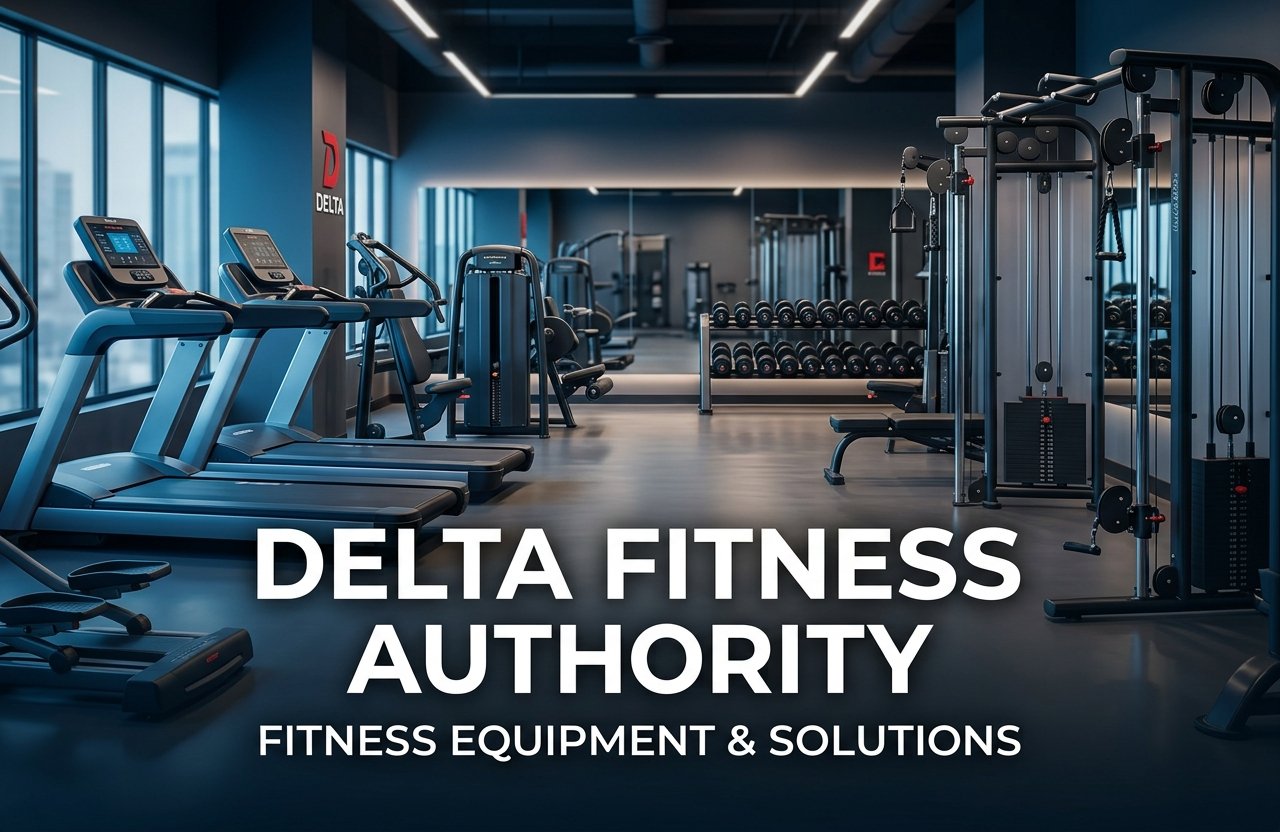
Delta Fitness Authority: A Complete Guide to Fitness Equipment
When people search for delta fitness authority, they often want to understand what the name means, what services are available, and whether it refers to a traditional gym, a fitness equipment supplier, or a broader wellness business. The distinction matters because choosing fitness equipment or planning a workout facility requires more than comparing machines and prices. Buyers also need to understand product quality, equipment installation, maintenance, safety, and long-term value. Available business information associates Delta Fitness Authority with Delta Health & Fitness and Delta Marketing in Saudi Arabia, part of the Alireza Group. However, online descriptions sometimes present the name as a general fitness concept or training program, creating confusion for readers. This guide separates the business-related information from broader fitness advice, explains what potential customers should evaluate, and provides practical steps for making informed decisions without relying on unverified marketing claims.
What Is Delta Fitness Authority?
Delta Fitness Authority is a name associated with professional fitness equipment, retail, distribution, and fitness facility solutions in Saudi Arabia. Rather than describing it simply as a gym where individuals pay monthly membership fees, it is more accurate to understand it within the commercial fitness industry.
A fitness solutions provider helps individuals and organizations obtain the equipment and support needed to create functional exercise spaces. These spaces may include commercial gyms, hotel fitness rooms, private training studios, corporate wellness centers, residential fitness facilities, and other exercise environments.
The distinction between a gym operator and an equipment provider is important.
A traditional gym usually focuses on memberships, exercise classes, personal training, and access to workout facilities. An equipment and solutions company focuses more on the products, planning, installation, and technical support that make those facilities possible.
Understanding the Name
The phrase contains three elements that help explain its intended business context.
- Delta: The name associated with the business and its related fitness operations.
- Fitness: The industry covering exercise equipment, training environments, physical activity, and wellness facilities.
- Authority: A term suggesting expertise or a specialist role, although the word itself does not prove a company’s qualifications or reputation.
Consumers should evaluate the actual business behind a name rather than assume that a company provides every service suggested by its branding.
For example, a supplier may offer commercial treadmills and strength machines without providing personal training or medical advice. Another business may offer coaching but have no equipment distribution operation. These services are related, but they are not interchangeable.
Is It a Traditional Gym?
Based on the available business descriptions, Delta Fitness Authority is better understood as a fitness equipment and facility-solutions business than as a conventional membership-based gym chain.
This means someone searching for a nearby gym should confirm whether a particular location offers public workout access, memberships, classes, or personal training. A showroom that sells exercise machines should not automatically be treated as a gym.
Likewise, a business purchasing equipment for a hotel or commercial health club should focus on its equipment portfolio, technical services, delivery arrangements, and after-sales support.
Understanding this distinction is the first step toward deciding whether the company is relevant to a particular fitness need.
Company Background and Business Structure
To understand the business, it helps to look at the organization behind it rather than relying on articles that use the name without explaining its origin.
The Alireza Group’s official company information describes Delta Marketing as part of its business structure and identifies Delta Health & Fitness as a division within its sports and leisure operations. According to that information, the fitness division began working with Life Fitness in 1992 and expanded into the distribution of international fitness equipment, staff training, and related facility services.
The group’s published information also identifies Delta Fitness Authority flagship stores in Jeddah, Riyadh, and Al Khobar.
For readers who want to check these details directly, the official Alireza Group page for Delta Marketing Health & Fitness provides background on the business, its product categories, and the services it describes.
Why the Business Background Matters
A company’s history can help establish context, but history alone does not guarantee that every product is suitable for every buyer. A careful customer should still investigate the particular machine, service, or facility proposal under consideration.
For instance, a gym owner buying several commercial treadmills needs different information from a homeowner purchasing a single exercise bike. The gym owner may need details about daily usage capacity, maintenance response times, spare parts, delivery schedules, and installation. The homeowner may care more about available space, noise, ease of use, warranty coverage, and the total purchase price.
The business background tells buyers where to begin their research. The final decision should depend on documented product and service details.
Products and Services Associated With Delta Fitness Authority
A professional fitness equipment supplier can support several stages of a fitness project. The exact scope depends on the products and services offered for a particular order, so customers should confirm what is included in a written quotation.
1. Cardiovascular Exercise Equipment
Cardio equipment supports activities that raise the heart rate and challenge the body’s ability to sustain movement.
Common equipment categories include:
- Treadmills for walking, jogging, and running.
- Stationary bikes for seated or upright cycling.
- Elliptical trainers for low-impact, full-body movement.
- Rowing machines for coordinated upper- and lower-body exercise.
- Other cardiovascular machines designed for different training needs.
These products serve different users and purposes. A treadmill may suit a facility with members who prefer walking or running, while a stationary bike can provide an alternative for people who prefer seated exercise.
A rowing machine requires coordination and appropriate technique. It should not be selected merely because it appears versatile.
How to Choose Cardio Equipment
Start with the people who will use the equipment.
For a commercial gym, consider the expected number of users, daily operating hours, equipment durability, ease of cleaning, and availability of technical support. For a home gym, measure the available space and check the equipment’s dimensions, power requirements, operating noise, and storage needs.
Buyers should also examine the console and controls. A machine with many digital features is not automatically better than a simpler model. The best option is one that users can operate comfortably and that the owner can maintain within budget.
2. Strength Training Equipment
Strength training equipment helps people develop muscular strength, improve physical capacity, and train specific movement patterns.
Typical categories include:
- Selectorized machines with adjustable weight stacks.
- Plate-loaded resistance machines.
- Power racks and squat racks.
- Weight benches.
- Dumbbells and barbells.
- Cable machines and functional trainers.
- Weight plates and related accessories.
Different equipment designs serve different purposes.
Selectorized machines allow users to change resistance by moving a pin between weight settings. They can be useful in facilities serving beginners and experienced members because adjustments are straightforward.
Plate-loaded machines require users to add or remove weight plates. They can provide a different resistance experience but require suitable storage, safe loading practices, and enough space for movement.
Free weights allow a wide range of exercises. However, users must learn proper technique, and some lifts may require a spotter or safety equipment.
What Buyers Should Inspect
Before purchasing a strength machine, examine its construction, stability, adjustment points, upholstery, handles, cable movement, and safety mechanisms.
Users should be able to adjust the machine to fit their body size and intended movement. Poor fit can make an otherwise well-built machine uncomfortable or difficult to use.
Commercial operators should also check whether the equipment is designed for the expected level of use. Equipment intended for occasional home workouts may not be suitable for a facility where many people train throughout the day.
3. Functional Training Equipment
Functional training uses movements and equipment to develop practical physical abilities such as balance, coordination, strength, and control.
Depending on the facility’s requirements, equipment may include cable systems, resistance bands, medicine balls, suspension trainers, kettlebells, and open exercise areas.
The main benefit of a functional training area is flexibility. One space can support a variety of exercises instead of being dedicated to a single machine.
However, flexibility creates planning challenges. Equipment needs to be stored properly, walking paths must remain clear, and users need enough room to perform exercises without interfering with other members.
A successful functional training area is not simply a collection of popular accessories. It is a space designed around the movements that users will perform and the number of people expected to train at once.
4. Pilates and Specialized Training Equipment
Pilates equipment can support controlled movement, stability, flexibility, and strength exercises. Specialized equipment may be relevant to studios, boutique fitness facilities, and some rehabilitation-related environments.
The appropriate equipment depends on the instructor’s qualifications, the type of sessions offered, and the needs of the intended users.
Customers should confirm the exact model, included accessories, installation requirements, and warranty before placing an order. They should also check whether the equipment requires specialized training to use safely.
Equipment alone does not establish the quality of a Pilates or rehabilitation service. Instructor competence, suitable programming, and an appropriate assessment of the client remain important.
5. Body Composition and Fitness Assessment Devices
Fitness facilities sometimes use body composition analyzers and other assessment devices to help track selected measurements over time.
These tools may support discussions about body composition, progress, and training goals. However, their readings should be interpreted carefully.
Body composition estimates can vary with hydration, recent meals, exercise, measurement conditions, and the technology used. A single reading should not be treated as a complete picture of health or fitness.
For useful comparisons, measurements should be collected under reasonably consistent conditions. Users should also understand what a device measures, what it estimates, and what its results cannot establish.
Fitness assessment devices are not substitutes for medical diagnosis. People with health concerns should seek appropriate professional advice rather than relying on a gym measurement alone.
Facility Planning: Turning Equipment Into a Useful Fitness Space
One of the most important parts of a commercial fitness project happens before the equipment arrives.
A room can contain expensive machines and still function poorly if the layout is inconvenient, circulation paths are blocked, or equipment does not match the people who use it.
Facility planning should begin with the purpose of the space.
Define the Intended Users
A hotel fitness room may serve travelers who want short cardio sessions and basic strength training. A residential fitness center may need to support a broad range of ages and experience levels. A specialist strength facility may prioritize racks, free weights, and lifting platforms.
These different goals require different equipment mixes.
Before selecting products, answer several questions:
- Who will use the facility?
- How many people may exercise at the same time?
- What are the main training goals?
- What experience levels should the equipment accommodate?
- How much floor space is available?
- What budget is available for purchasing and maintaining equipment?
These answers help prevent the common mistake of buying machines because they look impressive rather than because they meet a real need.
Plan the Layout Around Movement
The floor plan should account for equipment dimensions, user access, safe movement, and maintenance.
Cardio machines need adequate space for entry and exit. Weight training areas need enough room for users to move weights and perform exercises without striking nearby people or equipment. Functional training areas require clear zones for dynamic movement.
Emergency access and accessible routes should also be considered. Exact clearance requirements depend on the equipment, building regulations, and applicable safety standards, so a qualified designer should confirm the final layout.
A useful layout makes the space easy to understand. Members should be able to find equipment, move between areas, and complete workouts without unnecessary congestion.
Balance Variety With Actual Demand
A large equipment list does not necessarily produce a better gym.
For example, a facility with limited floor space may gain more value from a carefully selected mix of cardio machines, adjustable benches, dumbbells, and versatile strength equipment than from several specialized machines that see little use.
The correct mix depends on demand. If many users want cardiovascular exercise during peak hours, enough machines must be available to reduce waiting. If strength training is the main attraction, the facility may need more racks, benches, and resistance options.
Facility owners should use available membership data, user surveys, and observations of peak-hour traffic to guide purchasing decisions.
Consider Accessibility and Ease of Use
Equipment should accommodate the intended population as well as reasonably possible.
Important considerations include:
- Clear instructions and readable controls.
- Seats and adjustment points that are easy to reach.
- Stable entry and exit points.
- Suitable access routes around machines.
- Appropriate options for people with different fitness levels.
- Clear procedures for reporting damaged equipment.
Accessibility should be part of the original design rather than an afterthought. It helps more people use the facility safely and comfortably.
Who Can Benefit From Delta Fitness Authority?
The business model associated with this name may be relevant to several types of customers, but the benefits depend on the customer’s requirements and the specific services available.
Commercial Gym Owners
Gym owners need equipment that can withstand regular use and remain available to members.
For this group, purchase price is only one part of the decision. A machine that costs less initially may become more expensive if it requires frequent repairs or if replacement parts are difficult to obtain.
Owners should compare equipment specifications, warranty terms, expected maintenance needs, service coverage, and the supplier’s ability to support the installed products.
They should also evaluate the supplier’s experience with projects of a similar size. A provider that can supply individual machines may not necessarily be the best fit for a large facility requiring coordinated delivery and installation.
Hotel and Hospitality Operators
Hotels often need compact, easy-to-use fitness spaces that accommodate guests with different exercise habits.
A practical hotel gym may prioritize reliable cardio equipment, a selection of strength machines, free weights, clear instructions, and a layout that is easy to supervise and maintain.
Hotel operators should also consider noise, cleaning requirements, available electrical connections, and the time needed to repair equipment when it fails.
The goal is to provide a dependable fitness experience without creating unnecessary operational complexity.
Corporate Wellness Facilities
Employers may establish exercise areas to make physical activity more convenient for staff.
These facilities can vary from a small room with basic exercise equipment to a larger gym with dedicated training zones.
Before investing, an employer should assess likely employee participation, available space, opening hours, supervision needs, and ongoing operating costs.
The equipment should reflect actual demand. A small, well-maintained exercise room that employees use regularly may provide more practical value than an expensive facility with low participation.
Residential Communities
Apartment buildings and residential developments may provide fitness rooms as an amenity for residents.
These spaces need equipment that is reasonably versatile, straightforward to use, and appropriate for the expected number of users.
Property managers should consider durability, safety instructions, cleaning, maintenance responsibilities, and procedures for taking faulty equipment out of service.
A written maintenance plan is particularly important when residents use the facility without constant supervision.
Physiotherapy and Specialist Facilities
Physiotherapy clinics and specialist exercise environments have requirements that differ from those of general gyms.
Equipment selection should follow the services offered by qualified professionals and the needs of the people being treated.
A commercial fitness machine should not automatically be considered suitable for rehabilitation simply because it allows controlled movement. Suitability depends on the exercise, the user’s condition, the equipment’s design, and the professional’s judgment.
Facilities should confirm relevant specifications, cleaning procedures, safety features, and service arrangements before purchasing specialized products.
Home Fitness Buyers
Individual customers may also be interested in equipment sold through a specialist fitness retailer.
Home buyers should prioritize equipment that fits their space, budget, experience, and intended exercise routine.
A basic set of adjustable weights and a suitable bench may meet one person’s needs. Another person may prefer an exercise bike or treadmill because it is easier to use consistently.
The most effective purchase is not necessarily the most expensive one. It is the one that supports a realistic routine and can be maintained over time.
How to Evaluate Fitness Equipment Before Buying
Buying fitness equipment is a decision that affects both immediate costs and long-term performance. Whether the purchase involves one home treadmill or an entire commercial gym, the evaluation process should be based on evidence rather than appearance or brand recognition.
Step 1: Establish a Realistic Budget
Start by calculating the total cost of ownership instead of focusing only on the displayed purchase price.
A complete budget may include:
- Equipment purchase costs.
- Delivery and installation charges.
- Flooring and electrical work.
- Required accessories.
- Staff training.
- Routine servicing and replacement parts.
- Warranty exclusions and possible repair costs.
For a commercial project, it is also useful to reserve money for unexpected expenses. The appropriate reserve depends on the size of the project, the condition of the facility, and the equipment selected.
Ask suppliers to separate equipment costs from installation, maintenance, and other charges. This makes quotations easier to compare and reduces the risk of overlooking important expenses.
Step 2: Compare Technical Specifications
Two machines may look similar while differing significantly in construction, functionality, and suitability.
- For a treadmill, compare factors such as motor specifications, running surface dimensions, maximum user weight, speed range, incline settings, and intended usage category.
- For a strength machine, examine its resistance mechanism, adjustment range, frame construction, user capacity, cable system, and safety features.
- For a stationary bike, consider resistance adjustment, seat positioning, stability, console functionality, and the range of users the machine can accommodate.
Specifications should be evaluated against actual requirements. More features do not always justify a higher price.
Step 3: Test Equipment Where Possible
If a showroom or demonstration is available, test the equipment before making a commitment.
Check whether controls are easy to understand, adjustments feel secure, moving parts operate smoothly, and the machine fits your body and exercise style.
For commercial purchases, ask whether the supplier can arrange demonstrations of the specific models included in the quotation.
A brief test cannot predict every maintenance issue, but it can reveal practical problems that a product photograph or specification sheet may not show.
Step 4: Verify Warranty and Service Coverage
Warranty terms deserve particular attention.
Ask for written answers to these questions:
- How long does the warranty last?
- Which parts are covered?
- Does coverage include labor?
- Who performs repairs?
- Are service visits available in the buyer’s city?
- How are replacement parts ordered?
- Are there separate terms for commercial and residential use?
Never assume that a manufacturer’s warranty automatically covers every installation or maintenance expense.
The distinction is especially important for commercial equipment because some products have different warranty conditions depending on their intended use.
Step 5: Check Delivery and Installation Requirements
Large machines may require special transportation, suitable access routes, assembly, and electrical preparation.
Before ordering, measure doorways, lifts, corridors, stairways, and the final installation area. Confirm whether the supplier will move equipment into position, assemble it, test it, and remove packaging.
For larger facilities, the installation schedule should be coordinated with flooring, electrical work, building access, and other contractors.
A written installation plan helps reduce delays and prevents equipment from arriving before the site is ready.
Step 6: Compare the Complete Proposals
Request comparable quotations from relevant suppliers. Each proposal should identify the exact models, quantities, specifications, delivery arrangements, warranty terms, and service inclusions.
Avoid comparing a basic residential machine with a commercial model simply because both perform the same general function.
The lowest price may represent the best value, but only when the products and services are genuinely comparable.
The Importance of Maintenance and After-Sales Support
Fitness equipment requires ongoing care. Even well-built machines experience wear when used regularly, and neglected equipment can become uncomfortable, unreliable, or unsafe.
For commercial operators, maintenance should be part of the operating plan from the beginning.
Preventive Maintenance
Preventive maintenance means checking equipment and completing appropriate servicing before a minor issue becomes a major failure.
Depending on the machine and manufacturer instructions, routine tasks may include:
- Cleaning contact surfaces.
- Inspecting cables, belts, and moving components.
- Checking bolts and other fasteners.
- Examining power cords and electrical connections.
- Testing safety mechanisms.
- Recording faults and service dates.
Maintenance schedules should follow the manufacturer’s instructions and reflect the level of use. A treadmill used throughout the day may require more frequent attention than one used occasionally at home.
Users should not attempt repairs that require specialist training or electrical expertise. Faulty equipment should be taken out of service until it has been checked appropriately.
Reducing Equipment Downtime
Downtime occurs when a machine cannot be used because it is damaged, malfunctioning, or awaiting repair.
For a commercial gym, downtime can affect member satisfaction and reduce the value of the equipment investment. For a hotel, it may mean that an advertised amenity is temporarily unavailable.
Operators should track recurring faults, repair times, and maintenance expenses. This information can help them identify unreliable machines and make better decisions about future purchases.
When assessing a supplier, ask how service requests are handled, whether technicians are available locally, and how replacement parts are obtained. Request clear service commitments where they are important to the business.
Training Staff to Identify Problems
Staff do not need to perform complex repairs to improve equipment reliability. They do need to know how to recognize common warning signs.
These may include unusual noises, damaged cables, unstable components, inconsistent resistance, electrical problems, or controls that fail to respond.
A simple reporting process should allow staff to identify a fault, prevent further use when necessary, and notify the responsible maintenance team.
This approach helps ensure that small problems do not remain unnoticed until they become more serious.
Common Challenges and Limitations to Consider
A balanced assessment of Delta Fitness Authority must distinguish the potential advantages of a specialist fitness provider from the questions every customer should investigate before buying.
Confusion About the Business Model
Some online articles describe the name as a gym franchise, a digital coaching service, or a general fitness philosophy. Other descriptions connect it with equipment retail, distribution, and facility solutions.
These descriptions are not necessarily referring to the same service.
Customers should verify the legal business identity, official contact details, physical location, and exact service being offered. If an advertisement promises memberships, personalized nutrition programs, or a software platform, confirm that the specific offering exists and is provided by the organization you intend to contact.
This is more reliable than assuming every online description is accurate.
Product Availability and Delivery Times
The availability of a product can change. A model listed in a catalog may be temporarily unavailable, subject to a longer delivery schedule, or offered with different specifications in a particular market.
Before paying a deposit, obtain written confirmation of the model, quantity, estimated delivery date, and any conditions affecting the order.
For a commercial project, delayed equipment can also affect opening dates and contractor schedules. Delivery commitments should therefore be treated as part of the project plan.
Costs Beyond the Initial Purchase
A machine’s purchase price does not reflect every expense associated with owning it.
Electricity, servicing, consumables, replacement components, software subscriptions where applicable, and eventual replacement can contribute to the total cost.
Commercial operators should consider the expected life of the equipment and the consequences of a machine becoming unavailable.
Home users should also think about practical costs, including floor protection, space requirements, transportation, and maintenance.
Different Needs Require Different Solutions
A supplier may offer a wide range of equipment, but not every product is appropriate for every user.
Beginners may need simple controls and clear instructions. Experienced lifters may prioritize loading capacity and specific equipment dimensions. Hotels may value reliability and easy cleaning. Rehabilitation professionals may require specialized equipment selected for particular uses.
The right decision depends on the intended activity, the user’s experience, the facility’s requirements, and the available budget.
Marketing Claims Need Evidence
Terms such as premium, advanced, professional, and industry-leading are common in commercial fitness marketing. They do not independently establish product quality.
Look for technical specifications, written warranty terms, manufacturer documentation, relevant certifications where applicable, and clear service arrangements.
Similarly, claims about guaranteed weight loss, rapid muscle growth, or dramatic health improvements should be treated cautiously. Results depend on many factors, including exercise consistency, nutrition, recovery, and individual circumstances.
A credible fitness business should explain what its products and services provide without promising outcomes that cannot be guaranteed.
Practical Fitness Principles That Apply Beyond Equipment
Although the name is associated with a business in the fitness industry, good exercise decisions depend on principles that apply regardless of the equipment supplier.
Build Consistency Before Complexity
A workout plan does not need to be complicated to be useful.
Beginners can start with manageable activities such as walking, basic resistance exercises, and mobility work, then increase the challenge gradually as their ability improves.
The most important early goal is to establish a routine that fits daily life. A demanding schedule that cannot be maintained is often less useful than a moderate plan followed consistently.
Use Progressive Training
Progressive training involves gradually adjusting the challenge as the body adapts.
Depending on the activity, progression may involve increasing resistance, repetitions, duration, distance, or exercise difficulty.
Changes should be manageable rather than sudden. Excessive increases can create unnecessary fatigue and raise the risk of injury.
A training record can help users understand whether their workload is increasing and whether recovery is adequate.
Make Recovery Part of the Plan
Exercise places demands on the body, and recovery allows adaptation to occur.
Sleep, appropriate nutrition, rest between demanding sessions, and sensible training volume all contribute to sustainable progress.
Persistent pain, unusual shortness of breath, dizziness, or other concerning symptoms should not be ignored. People with existing medical concerns or significant limitations may need advice from a qualified healthcare professional before starting a demanding program.
Measure Progress Carefully
Progress can be measured in several ways, depending on the goal.
A person improving cardiovascular fitness might track walking duration, distance, or perceived effort. Someone focused on strength may record resistance and repetitions. A person working toward a healthier lifestyle might monitor consistency and everyday activity.
Body weight is only one possible measurement and does not fully describe physical fitness.
Use measures that match the goal, collect them consistently, and avoid drawing strong conclusions from a single reading.
Understand the Difference Between Equipment and Coaching
Equipment provides the means to perform an exercise. Coaching helps users decide what to do, how to do it, and how to progress.
A good machine cannot automatically correct poor technique or create a suitable training plan. Likewise, a well-designed workout cannot compensate for equipment that is damaged or inappropriate for the exercise.
When evaluating a fitness service, determine whether it provides equipment only, coaching, staff education, or a combination of these services. This prevents misunderstandings about what the purchase includes.
How to Make an Informed Decision
The most reliable way to assess a fitness supplier is to use a repeatable decision process. This reduces the influence of attractive marketing, unfamiliar terminology, and pressure to purchase quickly.
A Simple Buyer Checklist
Before choosing a product or service, work through the following checks.
- Confirm the business: Verify the company’s identity and the location from which the service will be delivered.
- Define your requirements: List the equipment, capacity, functions, and services you actually need.
- Set the budget: Include delivery, installation, maintenance, and other relevant expenses.
- Compare specifications: Check exact models and intended usage categories rather than relying on product photographs.
- Review the contract: Read warranty exclusions, payment conditions, delivery terms, and cancellation provisions.
- Confirm technical support: Find out who handles repairs and how service requests are managed.
- Inspect the final proposal: Make sure all promised products and services are documented before payment.
For commercial projects, the checklist should also include the floor plan, electrical requirements, safety considerations, installation schedule, and responsibilities for ongoing maintenance.
For a home purchase, the process can be simpler, but verifying the model, dimensions, warranty, and delivery terms remains important.
Questions to Ask Before Contacting a Supplier
A short list of questions can make a consultation much more useful.
- Which equipment models are available for my intended use?
- Are the products designed for residential or commercial operation?
- What is included in the quoted price?
- Does the proposal include delivery, installation, and initial testing?
- What warranty applies to the equipment and its components?
- Is local technical support available?
- Can you provide a written maintenance schedule?
- Are there additional charges or ongoing commitments?
For a complete facility project, also ask whether layout planning, staff training, equipment commissioning, and long-term service arrangements are included or quoted separately.
Clear answers help buyers compare providers fairly. They also create a written record of the expectations agreed upon before the project begins.
Delta Fitness Authority and the Future of Fitness Facilities
Fitness facilities continue to face changing expectations. Users may want more convenient access, varied training options, clearer progress tracking, and equipment that is comfortable and easy to operate.
Technology can support these goals, but it should solve a real problem rather than exist simply to make a facility look modern.
Digital Features and Connected Equipment
Some exercise machines offer digital consoles, workout tracking, entertainment, or connectivity with compatible devices.
These features may improve the user experience, particularly for people who enjoy monitoring their workouts. However, buyers should examine subscription costs, software compatibility, privacy policies, and the availability of support.
A connected machine may depend on software services that can change over time. Commercial operators should understand what happens if connectivity is lost or a digital feature is discontinued.
Basic controls, reliable operation, and ease of maintenance remain important even when equipment includes advanced technology.
Data and Fitness Progress
Fitness tracking can help users identify patterns and make informed adjustments to their routines.
For example, recording exercise duration and resistance settings can show whether a person is training consistently. Attendance data can help a gym understand which areas are busiest. Maintenance records can reveal whether certain machines experience repeated faults.
However, data is useful only when its meaning is understood. A high number of recorded workouts does not necessarily prove that a training plan is appropriate, and a body composition estimate is not a complete medical assessment.
Facilities should collect only the information they need, explain how it is used, and protect personal information appropriately.
Sustainability and Long-Term Value
Durability and repairability can also influence the long-term value of fitness equipment.
Machines that can be serviced effectively may remain useful for longer, reducing the need for premature replacement. Clear maintenance instructions and access to compatible parts can support this goal.
When comparing products, consider the expected service life, availability of parts, energy use where relevant, and the supplier’s repair arrangements.
Sustainability should be evaluated through practical evidence rather than broad marketing statements. A product’s actual lifespan and maintenance requirements may matter more than a single environmental claim.
The Importance of Human Expertise
Even as equipment becomes more advanced, people remain central to a successful fitness environment.
Qualified trainers help users select suitable exercises and develop safe techniques. Maintenance professionals keep equipment in working condition. Facility managers organize space and operations. Clear communication helps customers understand what a product can and cannot do.
For this reason, a well-equipped facility should be judged by more than the number of machines it contains.
Its value also depends on how effectively those machines are selected, installed, maintained, and used.
Frequently Asked Questions About Delta Fitness Authority
1. What is Delta Fitness Authority?
Delta Fitness Authority is associated with Delta Health & Fitness, the fitness division of Delta Marketing within the Alireza Group’s business structure. It is connected with fitness equipment distribution, retail, training, and facility-related services in Saudi Arabia.
2. Is Delta Fitness Authority a regular gym?
It is better understood as a fitness equipment and solutions business than as a conventional membership-based gym chain. Anyone seeking a place to exercise should confirm whether a particular location offers memberships, workout access, or training services.
3. Where is Delta Fitness Authority located?
The Alireza Group identifies Delta Fitness Authority flagship stores in Jeddah, Riyadh, and Al Khobar, Saudi Arabia. Customers should verify current addresses, opening hours, and available services before visiting.
4. What types of fitness equipment are associated with the business?
Its published product information includes cardiovascular equipment, strength training machines, rowing equipment, Pilates products, body composition devices, and other fitness-related products. Exact availability and specifications should be confirmed with the supplier.
5. Does Delta Fitness Authority provide equipment for commercial gyms?
Yes. The published company information describes services for health clubs, private gyms, personal studios, hotels, corporate facilities, residential developments, and other institutional environments. The scope of equipment supply, installation, training, and maintenance should be confirmed for each project.
6. Is Delta Fitness Authority suitable for home gym buyers?
It may be relevant to home buyers looking for fitness equipment, depending on product availability, location, budget, and delivery options. Buyers should compare the exact models, dimensions, warranty coverage, and total cost before making a decision.
7. What should customers check before buying fitness equipment?
Customers should verify the supplier, compare technical specifications, inspect equipment where possible, review the warranty, confirm delivery and installation terms, and understand maintenance costs. Commercial buyers should also assess equipment capacity and service support.
8. Does buying premium equipment guarantee better fitness results?
No. Equipment can support a training program, but results depend on consistent exercise, suitable programming, nutrition, recovery, and individual circumstances. The most expensive machine is not automatically the most appropriate choice.
9. How important is after-sales service?
After-sales service is particularly important for commercial facilities, where equipment failures can interrupt workouts and affect operations. Buyers should understand repair procedures, spare-parts availability, service coverage, and warranty conditions before purchasing.
10. How can customers distinguish reliable information from misleading claims?
Check official company information, written product specifications, clear contractual terms, and credible manufacturer documentation. Be cautious of websites that make unsupported promises, confuse unrelated businesses, or describe services without identifying the organization that actually provides them.
Conclusion
Delta Fitness Authority is best understood in the context of professional fitness equipment and facility solutions associated with Delta Health & Fitness and Delta Marketing in Saudi Arabia. Its published business information describes equipment distribution, retail operations, staff training, and services supporting commercial and institutional fitness environments.
The most important distinction is between supplying fitness infrastructure and operating a conventional gym. Understanding that difference helps individuals and organizations determine whether the business matches their needs.
For buyers, the strongest decisions come from comparing technical specifications, checking warranty terms, calculating the total cost of ownership, and confirming the availability of installation and maintenance support. Gym operators should pay particular attention to equipment capacity, layout, service arrangements, and long-term operating costs. Home users should focus on suitability, space, ease of use, and affordability.
Ultimately, a successful fitness environment depends on more than the equipment brand. Careful planning, appropriate exercise choices, reliable maintenance, and informed purchasing decisions all contribute to a safer and more useful experience.