Navigator Pear: Meaning, Uses, Benefits, and Practical Guide
The term navigator pear may refer to a specific pear variety, a product name, a gardening term, or a name used in an online context. Understanding its intended meaning is important because the right information depends on whether the subject relates to fruit cultivation, food, plant identification, or a particular brand or product. This guide explores the term carefully, explains what can be established, and provides practical advice for identifying the correct subject without relying on unsupported claims.
One important limitation is that no supporting real-world data was included in the request. Therefore, it would be misleading to invent details about the fruit’s origin, nutritional composition, growing conditions, commercial availability, or scientific classification. The following article distinguishes general knowledge about pears from information that would need to be verified specifically for something called navigator pear.
What Is Navigator Pear?
Botanical identity, appearance, and purpose
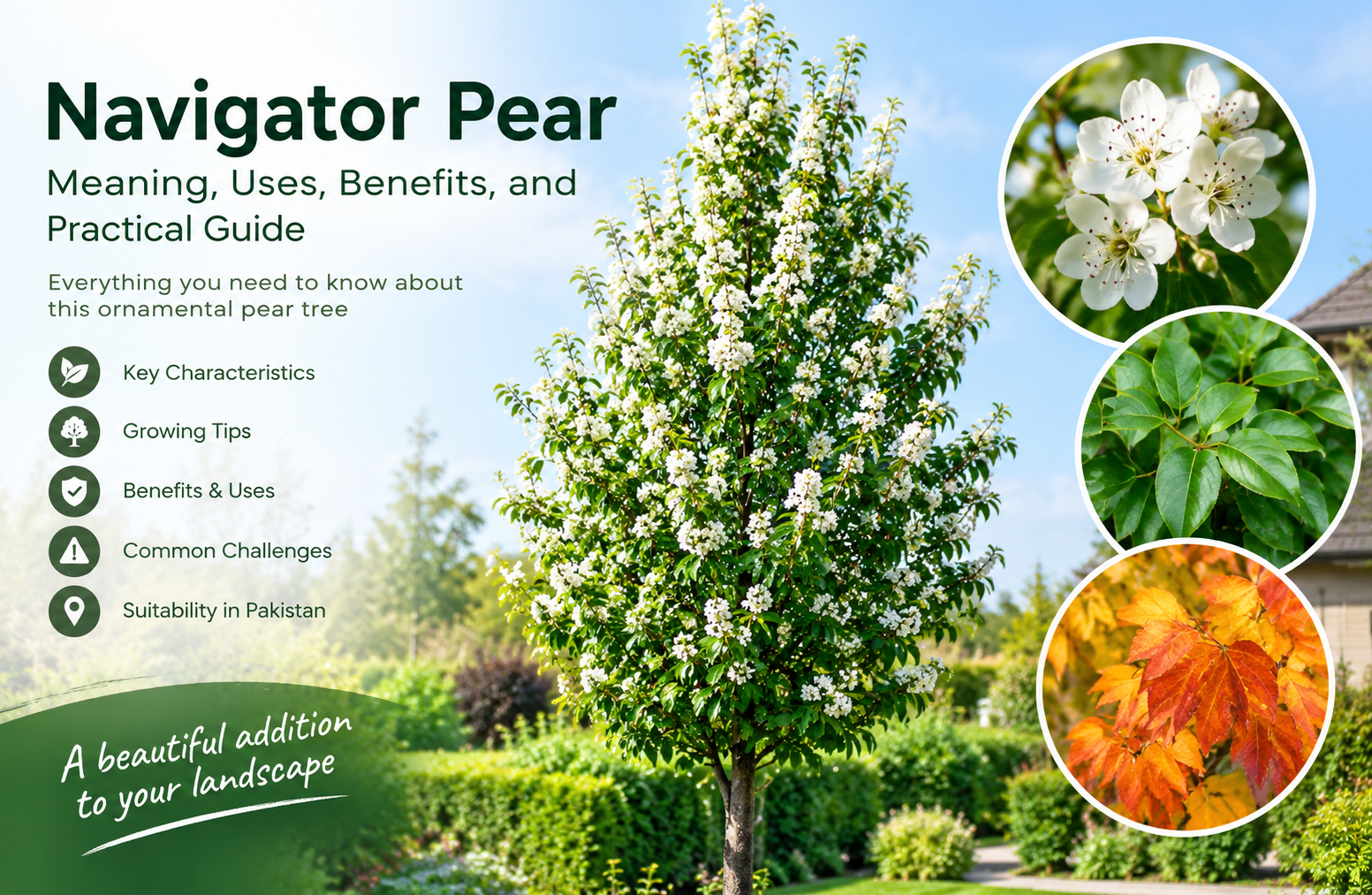
Navigator pear is identified in nursery listings as an ornamental pear tree, commonly sold under the botanical cultivar designation Pyrus × ‘DurPSN303’. Unlike familiar fruit-bearing pear varieties grown primarily for eating, this tree is valued mainly for its shape, spring flowers, foliage, and suitability for landscape planting. Nursery information describes it as a hardy, densely branched tree with an upright, pyramidal growth habit.
Bron and Sons Nursery
+1
The distinction between an ornamental pear and an edible pear is essential. Both belong to the genus Pyrus, but they may serve very different purposes in a garden. An edible pear tree is selected for the quality and quantity of its fruit. An ornamental selection is usually chosen for its visual appeal, growth pattern, seasonal interest, and ability to fit into a planned landscape.
For anyone researching this name, the most useful starting point is to establish whether the goal is to purchase a decorative tree, identify an existing plant, or find a pear that produces fruit for eating.
Is It a Fruit Tree or an Ornamental Tree?
The available nursery evidence identifies this selection primarily as an ornamental tree. It should not automatically be treated as a commercial fruit cultivar simply because the word pear appears in its name.
Ornamental pear trees can produce flowers and may develop fruit, depending on the cultivar and growing conditions. However, fruit production is not necessarily their main purpose. The quantity, size, quality, and suitability for eating should not be assumed without cultivar-specific evidence.
This matters when comparing trees at a garden center. A customer who wants fresh fruit may be disappointed by a tree selected mainly for its landscape characteristics. Conversely, someone looking for a narrow, flowering tree may prefer an ornamental selection over a large fruit-bearing variety that requires regular harvesting and additional orchard care.
Botanical Name and Classification
The reported botanical designation is Pyrus × ‘DurPSN303’. The genus Pyrus includes cultivated pears and related species. The multiplication sign is commonly used in botanical names to indicate hybrid origin, although the precise breeding history of this particular selection should be confirmed through reliable cultivar documentation.
When buying a tree, botanical identification is more useful than a common name alone. Common names may vary among regions, nurseries, and online retailers. A cultivar code helps buyers compare listings and reduces the chance of purchasing a different tree with a similar name.
Before placing an order, check the following details:
- The botanical name printed on the plant label.
- The cultivar designation supplied by the nursery.
- The expected mature height and width.
- The tree’s suitability for the local climate.
- The supplier’s guidance on flowering, fruiting, and maintenance.
A label is a useful starting point, but it does not replace a reliable nursery description or local horticultural advice.
Key Characteristics of Navigator Pear
Understanding the tree’s physical characteristics helps determine whether it suits a particular property. The following details reflect the available nursery listing rather than a claim that every tree will develop identically in every climate.
| Characteristic | Reported information |
| Plant type | Ornamental pear tree |
| Botanical designation | Pyrus × ‘DurPSN303’ |
| Growth habit | Upright, pyramidal, and dense |
| Mature height | Approximately 7 to 8 metres |
| Mature spread | Approximately 3 to 4 metres |
| Flowers | White blooms in early to mid-spring |
| Summer foliage | Dark green and glossy |
| Autumn foliage | Orange to yellow tones |
| Soil preference | Moist, well-drained soil |
| Main purpose | Landscape and ornamental planting |
These measurements and descriptions come from a commercial nursery listing and should be treated as estimates, not guaranteed dimensions.
Bron and Sons Nursery
Upright Growth Habit
One of the most useful reported features is the tree’s upright form. Instead of developing a very broad canopy, it generally grows more vertically, producing a relatively narrow outline.
This can be valuable in gardens where horizontal space is limited. A broad shade tree may interfere with pathways, windows, neighboring plants, or outdoor seating areas. A narrower ornamental tree can provide height and structure without occupying the same amount of ground space.
However, narrow growth does not mean that the tree can be planted anywhere. Mature branches still need room, and roots require suitable soil volume. The eventual canopy must also be considered when placing the tree near buildings, fences, overhead cables, and underground utilities.
White Spring Flowers
White flowers provide one of the main seasonal attractions of ornamental pear trees. Spring flowering can create a noticeable display before the tree develops its full summer canopy.
Flowering intensity depends on factors such as tree maturity, weather, growing conditions, and the health of the plant. A newly planted specimen may not deliver the same display as an established tree.
It is also worth distinguishing a tree’s ornamental value from its fragrance. The available cultivar information confirms white flowers but does not establish a specific fragrance profile. Buyers who are sensitive to strong floral odors should ask the nursery about this feature before purchasing.
Glossy Green Leaves
The reported dark green foliage contributes to the tree’s summer appearance. A healthy canopy can provide visual structure, soften hard landscape features, and create contrast with lighter-colored buildings or paving.
Leaf quality is closely linked to growing conditions. Poor drainage, drought stress, nutrient problems, and pests can affect foliage density and color. Regular inspection is more useful than assuming that an ornamental tree will remain attractive without care.
Autumn Color
The nursery description reports orange and yellow autumn foliage. Seasonal color can make the tree useful in gardens that need visual interest beyond spring flowering.
The exact shade may vary with local weather, temperature changes, sunlight exposure, and plant health. It is better to view the reported color as a general characteristic than to expect a particular shade every year.
Mature Size and Garden Planning
The reported height of 7 to 8 metres makes this a medium-sized landscape tree rather than a small shrub. Its estimated spread of 3 to 4 metres also means that adequate clearance is necessary.
When planning a planting location, consider the tree’s future size rather than its dimensions at purchase. Young nursery trees can look small enough to fit beside a wall or narrow walkway, but their branches and roots need space as they mature.
A simple planting plan should account for:
- Distance from walls and foundations.
- Clearance from footpaths and driveways.
- Available sunlight throughout the day.
- Underground drainage and irrigation lines.
- Nearby trees that may compete for light and water.
- Room for pruning and maintenance equipment.
Benefits of Growing Navigator Pear
The potential advantages of this ornamental tree are mainly related to landscaping rather than food production.
1. Useful for Narrow Landscape Spaces
The upright growth pattern may suit properties where a wide canopy would be inconvenient. It can add height along a boundary, beside a driveway, or within a carefully planned garden.
The important consideration is whether the available space can accommodate the mature height and root system. A narrow canopy does not eliminate the need for appropriate spacing.
2. Seasonal Visual Interest
The combination of white spring flowers, green summer foliage, and reported autumn color offers interest at different times of the year.
This is useful when designing a garden that should look attractive across several seasons rather than only during flowering. Pairing the tree with evergreen shrubs, ground covers, and seasonal flowers can create a balanced composition.
3. Potential Suitability for Colder Climates
The nursery describes this selection as extremely hardy. That is encouraging for gardeners in regions where winter temperatures can challenge less suitable ornamental trees.
However, the word hardy does not provide a complete climate specification. It does not identify an exact minimum temperature, establish performance in every hardiness zone, or guarantee survival in locations with extreme summer heat.
Gardeners should confirm the tree’s climate suitability with a nursery familiar with their region. Cold tolerance and heat tolerance are separate characteristics, and a tree that performs well in one climate may struggle in another.
4. A Defined Landscape Structure
An upright tree can help organize a garden visually. It can draw the eye upward, frame an entrance, create a transition between lawn and building, or add structure to a mixed planting scheme.
This benefit is particularly relevant in modern gardens, where clean lines and controlled plant shapes are often preferred. The tree can also provide contrast beside rounded shrubs or low ground-cover plants.
5. Less Emphasis on Harvesting
Because the selection is sold primarily for ornamental use, it may appeal to homeowners who want a tree for its appearance rather than a regular fruit harvest.
This should not be interpreted as proof that the tree never produces fruit or requires no cleanup. Ask the supplier about fruiting behavior before planting it near patios, paths, parking areas, or other surfaces where fallen fruit would be inconvenient.
6. Potential Value in Public and Commercial Landscapes
Ornamental trees are often used to improve the appearance of commercial properties, residential developments, parks, and streetscapes. Their value depends on how well their mature size, root behavior, maintenance needs, and climate requirements match the site.
A tree’s landscape performance cannot be judged from flowers and foliage alone. Long-term suitability also depends on maintenance budgets, soil conditions, exposure to pollution, and the available rooting area.
Where Can Navigator Pear Be Used?
The best location depends on the space, climate, and purpose of the planting. The following examples describe possible uses based on the tree’s reported form and ornamental characteristics, not a guarantee of performance at every site.
Residential Gardens
In a residential garden, the tree can provide height and seasonal interest. It may work as a specimen tree, meaning that it is planted where its shape and foliage can be appreciated individually.
A specimen planting usually benefits from a clear view of the tree’s natural outline. Crowding it among several large trees may reduce its visual impact and create competition for sunlight.
Driveways and Property Boundaries
A narrow growth habit may make the tree worth considering along a driveway or property boundary. However, the exact planting distance should be based on mature dimensions and the layout of the property.
Avoid placing the tree where future branches could obstruct visibility for drivers or pedestrians. If the driveway is close to a building, consider the root zone and the space needed for maintenance.
Commercial Landscapes
Offices, retail properties, and residential complexes often need trees that add visual interest without occupying excessive ground space. An upright ornamental pear may be worth evaluating for these locations.
Before specifying it for a commercial project, landscape designers should confirm its climate suitability, mature dimensions, disease concerns, and maintenance requirements. These details are especially important when planting multiple trees across a large site.
Public Spaces and Streetscapes
Trees in public spaces need to withstand the conditions of their planting site, which may include compacted soil, restricted rooting space, reflected heat, pollution, and irregular watering.
A tree that performs well in an open garden may behave differently in a narrow pavement bed. Public planting decisions should therefore be based on local experience and site-specific assessments rather than appearance alone.
Mixed Ornamental Planting
The tree can potentially be combined with flowering shrubs, evergreen plants, ornamental grasses, and ground covers.
A useful design principle is to give each plant a clear role. The pear tree can provide vertical structure, shrubs can fill the middle layer, and low-growing plants can cover the ground. Leaving adequate space between plants also improves access for pruning and inspection.
How to Plant and Care for Navigator Pear
Successful tree planting begins with choosing a suitable site. Even a hardy ornamental tree can struggle if the soil remains waterlogged, the roots are restricted, or the climate is unsuitable.
The following guidance combines general ornamental pear care with the site preferences reported for this cultivar. It should not be treated as a cultivar-specific maintenance schedule where reliable details are unavailable.
Step 1: Choose the Right Location
Start by examining the planting site throughout the day. Look for areas that receive sufficient sunlight, have reasonable air circulation, and provide room for the mature tree.
The nursery listing describes a preference for moist, well-drained soil with a higher pH. This is an important distinction: moist soil retains enough water for healthy growth, while well-drained soil allows excess water to escape.
Before planting, check:
- Whether water collects after rainfall.
- Whether the area receives direct sunlight.
- Whether nearby trees create heavy shade.
- Whether the soil is compacted or unusually shallow.
- Whether underground pipes or cables cross the site.
- Whether the mature tree could interfere with buildings or pathways.
If the site remains wet for long periods, improve drainage where practical or choose a more suitable location. Planting directly into a waterlogged area can expose roots to oxygen deprivation and increase the risk of root problems.
Step 2: Prepare the Soil
Good soil preparation creates conditions for roots to establish. It does not require filling the planting hole with large amounts of fertilizer or rich compost.
Begin by removing weeds and grass around the planting location. Dig a hole that accommodates the root system without forcing roots into a tight space. The hole should generally be wider than the root ball, while its depth should allow the root flare to remain at or slightly above the surrounding ground level.
Avoid burying the trunk base. Planting too deeply can interfere with oxygen exchange around the roots and contribute to long-term health problems.
If the soil is compacted, loosen the surrounding area where possible. Do not create a small pocket of very different soil inside heavy clay, because water can collect in the amended hole instead of draining into the surrounding ground.
A soil test can help determine pH and identify nutrient deficiencies. Because the reported cultivar preference includes a higher soil pH, testing is more reliable than adding lime or other amendments without knowing the existing conditions.
Step 3: Plant the Tree Carefully
For a container-grown tree, remove the container gently and examine the roots. If the roots circle tightly around the root ball, carefully loosen the outer roots where appropriate.
Position the tree upright and backfill the hole with the excavated soil. Firm the soil gently to remove large air pockets without compacting it excessively.
Water thoroughly after planting to settle the soil around the roots.
Check the following before finishing:
- The trunk is upright.
- The root flare is not buried.
- The root ball is fully supported.
- The soil is not packed too tightly.
- Water can drain away from the planting area.
Staking is not automatically necessary. It may be appropriate in exposed locations or where the root ball cannot remain stable, but excessive staking can restrict normal trunk movement.
Step 4: Water According to Soil Conditions
Newly planted trees need consistent moisture while their roots establish. The correct watering frequency depends on temperature, rainfall, soil texture, drainage, and the size of the root ball.
Rather than following a rigid calendar, check the soil near the root zone. If it is drying out, water thoroughly. If it is still wet, allow excess moisture to drain before watering again.
Several practical principles help:
- Water deeply enough to moisten the root zone.
- Avoid frequent, shallow watering that wets only the surface.
- Check soil moisture during hot, dry weather.
- Reduce supplemental watering when rainfall is sufficient.
- Avoid keeping the roots continuously saturated.
Young trees generally need closer monitoring than established trees. During the first growing season, inspect the soil regularly, particularly after periods of heat or strong wind.
Do not assume that drooping leaves always mean the tree needs more water. Both drought stress and waterlogged roots can produce similar symptoms. Check the soil before deciding how to respond.
Step 5: Apply Mulch Properly
A layer of organic mulch can help conserve soil moisture, reduce weed competition, and moderate soil temperature.
Spread mulch over the root area, keeping it away from direct contact with the trunk. A commonly used depth is approximately 5 to 8 centimetres, adjusted to the material and site conditions.
Avoid piling mulch against the bark. Excessive moisture around the trunk can contribute to decay and create conditions that favor pests.
Mulch should also remain below the root flare. If the trunk base is already buried, remove excess soil or mulch carefully rather than adding another layer.
Step 6: Prune for Structure and Safety
Pruning should support the tree’s natural form rather than force it into an artificial shape.
For an upright ornamental tree, the main objectives are usually to remove dead or damaged branches, correct structural problems, and maintain safe clearance around buildings and paths.
A practical approach is to:
- Inspect the canopy for dead, broken, or diseased branches.
- Identify branches that rub against one another.
- Look for weak attachments or competing leaders.
- Remove problem branches with suitable pruning cuts.
- Step back regularly to preserve a balanced shape.
Avoid removing large amounts of healthy foliage in a single session unless a qualified arborist identifies a specific reason. Excessive pruning can stress the tree and encourage unwanted growth.
The ideal pruning season depends on local conditions, the tree’s health, and the type of work required. If disease is suspected, seek regional advice before pruning because timing and sanitation can influence disease spread.
Step 7: Fertilize Only When Needed
Fertilizer is not a substitute for suitable soil, proper drainage, or adequate watering.
Excessive nitrogen can encourage vigorous leafy growth without improving the tree’s overall structure. It may also create growth that requires additional pruning.
Begin by observing the tree’s annual growth and leaf condition. If the tree grows poorly, investigate the cause before applying fertilizer.
A soil test can reveal whether nutrients are lacking. If a deficiency is confirmed, choose an appropriate product and follow its label instructions. Avoid placing concentrated fertilizer directly against the trunk or roots.
Newly planted trees often benefit more from careful watering and root establishment than from aggressive fertilization.
Step 8: Inspect the Tree Through the Seasons
Regular observation helps identify problems before they become severe.
During spring, examine flowering, bud development, and emerging leaves. In summer, check for wilting, leaf discoloration, insect activity, and drought stress. During autumn, observe leaf color and any unusual premature leaf drop. In winter, inspect the trunk and branch structure where the climate permits.
A simple record of watering, pruning, and visible changes can help distinguish a recurring problem from a temporary seasonal response.
For homeowners, a brief inspection every week or two during the growing season is a reasonable starting point. More frequent checks may be useful during extreme heat, drought, or periods of unusual disease activity.
Common Challenges and How to Address Them
No ornamental tree is completely maintenance-free. The most effective approach is to identify the likely cause of a problem before attempting treatment.
Poor Drainage
Waterlogged soil can deprive roots of oxygen. Symptoms may include yellowing foliage, weak growth, wilting despite wet soil, and gradual decline.
What to do: Check the soil several centimetres below the surface. If it remains saturated, investigate drainage and irrigation practices. Do not respond automatically by adding more water or fertilizer.
Persistent problems may require a drainage assessment or advice from a local arborist.
Drought Stress
Insufficient water can cause leaf curling, wilting, scorched edges, and premature leaf drop. Young trees are particularly vulnerable because their roots have not yet spread widely into the surrounding soil.
What to do: Check moisture around the root ball and water deeply when necessary. Mulch can help reduce evaporation, but it cannot compensate for severe soil limitations or an inadequate watering supply.
Unsuitable Soil pH
Soil pH influences how readily plants can absorb certain nutrients. A tree growing in unsuitable soil may show poor growth or leaf discoloration even when fertilizer is available.
What to do: Obtain a soil test before making substantial pH adjustments. Any amendment should be based on the measured pH, the soil type, and a realistic assessment of whether the desired change is practical.
Structural Problems
An upright growth habit does not eliminate the possibility of weak branch attachments, crossing limbs, or storm damage.
What to do: Inspect the tree’s structure periodically. Remove small dead branches appropriately and consult an arborist when large limbs, cracks, or significant structural defects are present.
Pests and Diseases
Ornamental pear trees may encounter insects and diseases, but susceptibility varies by species, cultivar, climate, and local pest pressure. The available cultivar listing does not establish a complete resistance profile for this particular tree.
What to do: Identify the pest or disease before applying treatment. Photograph affected leaves, stems, or branches and consult a local horticultural extension service or qualified arborist. Avoid broad pesticide applications without a clear diagnosis.
Climate Mismatch
A tree described as hardy may still struggle under extreme heat, prolonged drought, unsuitable humidity, or other environmental conditions.
What to do: Confirm regional suitability before purchasing. Ask for specific information about heat tolerance, cold tolerance, and performance in climates similar to yours.
Navigator Pear Compared With Edible Pear Trees
The most important comparison is between the intended purpose of an ornamental selection and the fruit-producing purpose of traditional pear cultivars.
| Feature | Navigator pear | Typical edible pear cultivar |
| Primary purpose | Ornamental landscaping | Fruit production |
| Main selection criteria | Shape, flowers, foliage, seasonal appearance | Taste, texture, yield, ripening time |
| Fruit expectations | Should be verified for the specific cultivar | Selected for edible fruit |
| Harvest planning | Not normally the main objective | Important part of cultivation |
| Maintenance priorities | Structure, appearance, site suitability | Tree health, fruit quality, pruning, crop management |
| Pollination requirements | Verify if fruiting matters | Often requires a compatible pollinator for reliable crops |
The comparison is general. It does not mean that every ornamental pear produces no fruit or that all edible pears have identical growing requirements.
Traditional pear cultivars also differ substantially. European pears commonly soften as they ripen, while many Asian pears retain a crisp texture. The appropriate choice depends on whether the gardener prioritizes fresh eating, cooking, storage, or ornamental appearance.
Which Type Is Better for a Home Garden?
Choose an ornamental selection when the primary goal is a decorative tree with a particular shape and seasonal appearance.
Choose an edible cultivar when fruit production is the main objective. In that case, investigate the cultivar’s flavor, expected fruit size, harvest season, disease resistance, pollination needs, and suitability for the local climate.
For a small garden, the mature size of the tree matters as much as its purpose. A fruit tree that becomes too large may require more pruning than the owner can reasonably manage. Similarly, an ornamental tree planted too close to a path may create future maintenance problems even if it looks ideal when young.
The best tree is not necessarily the one with the most attractive nursery photograph. It is the one whose long-term characteristics match the site and the owner’s priorities.
How to Choose a Reliable Nursery
The name alone is not enough to confirm that a plant is correctly identified. Nursery selection deserves careful attention, particularly when buying a less familiar cultivar.
Verify the Label
Look for the botanical name and cultivar designation on the label or invoice. Compare them with the nursery’s written product information.
For reference, the Navigator Pear nursery listing identifies the selection as Pyrus × ‘DurPSN303’ and provides its reported dimensions and ornamental characteristics.
A matching name is useful evidence, but it does not independently guarantee the identity or quality of the individual plant.
Inspect Plant Health
When possible, inspect the tree before purchase.
Look for:
- A trunk without obvious major wounds.
- Firm branches without extensive dieback.
- Foliage without widespread unexplained discoloration.
- A root ball that is not severely damaged or excessively dry.
- No obvious signs of serious pest infestation.
- A clear planting label and reliable supplier information.
Some seasonal leaf loss may be normal for a deciduous tree. Judge the plant according to its season and growing stage rather than assuming that every leafless specimen is unhealthy.
Ask Specific Questions
A knowledgeable nursery should be able to explain what is known about the cultivar and what remains uncertain.
Useful questions include:
- Is this the exact cultivar named on the label?
- What mature height and spread should I expect locally?
- Is the tree suitable for my climate?
- How much direct sunlight does it need?
- Does it produce noticeable fruit?
- Are there known local pest or disease concerns?
- What watering routine is appropriate after planting?
- What replacement policy applies if the plant arrives damaged?
Clear answers are more valuable than broad marketing claims such as maintenance-free, universally hardy, or suitable for every garden.
Is Navigator Pear Suitable for Pakistan?
Suitability in Pakistan requires special consideration because the country’s climates vary considerably. Conditions in cooler upland areas differ from those in the hotter plains, and a recommendation for one region should not automatically be applied nationwide.
The available nursery description presents the tree as hardy, but that statement alone does not establish its performance in Pakistan’s summer heat, local soil conditions, or rainfall patterns.
Consider Heat and Water Availability
In hot areas, the main concerns may include intense sunlight, high summer temperatures, dry winds, and the availability of irrigation water.
Young trees may need careful monitoring during establishment. However, watering more frequently is not always the answer because heavy soils can retain excess moisture.
Before purchasing, ask a supplier familiar with the local region whether the cultivar has been grown successfully under comparable conditions.
Consider Soil and Drainage
Soil conditions can vary significantly between properties, even within the same town. A soil test can help determine pH, drainage concerns, and possible nutrient limitations.
Where the soil is heavy or poorly drained, site preparation may be more important than fertilizer selection. Where soil is dry and free-draining, water management may require more attention.
Consult Local Horticultural Expertise
For planting decisions in Pakistan, regional agricultural research stations and horticultural specialists can provide more relevant advice than generalized international hardiness descriptions.
The Punjab Agriculture Department publishes information about horticultural research stations and fruit-growing support. Local guidance is particularly useful when deciding whether an unfamiliar ornamental cultivar can tolerate regional conditions.
The practical conclusion is straightforward: do not assume that this tree will perform well in every part of Pakistan simply because it is described as hardy. Confirm the cultivar’s identity and local suitability before investing in a mature specimen or a large planting project.
Frequently Asked Questions About Navigator Pear
1. What is Navigator pear?
Navigator pear is an ornamental pear tree identified in nursery listings as Pyrus × ‘DurPSN303’. It is primarily grown for its upright shape, white spring flowers, glossy green foliage, and reported yellow to orange autumn color rather than for commercial fruit production.
2. How tall does Navigator pear grow?
The available nursery listing reports a mature height of approximately 7 to 8 metres and a spread of 3 to 4 metres. Actual dimensions can vary with growing conditions, climate, soil, and maintenance.
3. Does Navigator pear produce edible fruit?
The tree is marketed primarily for ornamental purposes. The available information does not establish the quality, quantity, or suitability of its fruit for eating. Anyone considering it for food production should confirm these details with a knowledgeable nursery before purchasing.
4. How much sunlight does Navigator pear need?
A sunny location is a sensible starting point for ornamental pear cultivation. However, the precise sunlight requirements and heat tolerance of this cultivar should be confirmed locally. Adequate sunlight, suitable soil, and good drainage all contribute to healthy growth.
5. Is Navigator pear easy to maintain?
It can be manageable when planted in a suitable location, but it is not maintenance-free. Establishment watering, occasional structural pruning, soil moisture monitoring, and inspection for pests or diseases may be necessary.
6. Can Navigator pear grow in Pakistan?
Its suitability depends on the region. Pakistan’s climate ranges from relatively cool uplands to very hot plains. The available information does not establish the cultivar’s performance throughout the country, so local horticultural advice is recommended before planting.
Conclusion
Navigator pear is best understood as an ornamental pear tree selected for its landscape qualities rather than as a conventional fruit-producing variety. Its reported upright growth, white spring flowers, glossy green foliage, and autumn color make it worth considering for gardens and other landscaped spaces where a relatively narrow tree is desirable.
Its success depends on more than appearance. Gardeners should consider mature dimensions, soil drainage, sunlight, water availability, climate suitability, and ongoing maintenance before choosing a planting location. Reliable identification is equally important because a common name alone cannot confirm a tree’s exact characteristics.
For anyone researching navigator pear, the most practical approach is to verify the botanical designation, compare the nursery’s specifications, and assess the planting site before making a purchase. Those steps help distinguish realistic horticultural expectations from assumptions and make it easier to choose a tree that suits the intended landscape.