Banskathi Rice: Taste, Benefits, Nutrition, and Cooking Guide
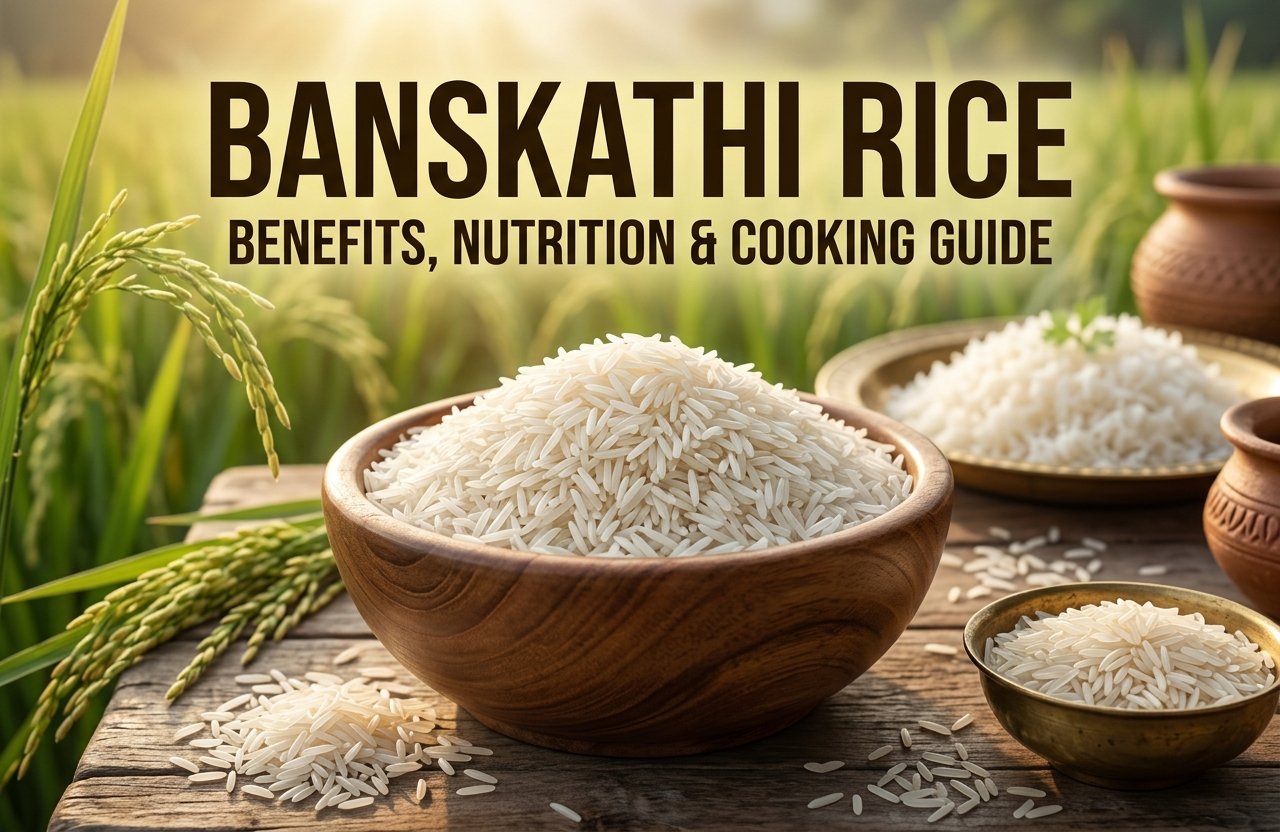
Banskathi rice is a popular slender-grain rice variety associated with West Bengal, India, known for its delicate grain shape, pleasant flavor, and versatility in everyday cooking. Whether you enjoy freshly cooked rice with dal and vegetables or prefer making pulao and biryani at home, banskathi rice offers a useful balance of texture, taste, and cooking performance. It is especially valued in Bengali households, where rice is an essential part of daily meals and traditional food culture.
Choosing the right rice involves more than looking at grain length or price. The variety, milling process, storage conditions, and cooking method all influence the final result. Some rice products are sold as raw rice, while others are parboiled or processed differently. These differences can affect the texture, nutritional composition, cooking time, and suitability for particular dishes.
This guide explains what this rice is, where it is associated with cultivation, what makes it distinctive, how to cook it properly, and what to consider before purchasing it. It also separates established agricultural information from marketing claims, helping readers make informed decisions without relying on exaggerated promises about taste or health.
What Is Banskathi Rice?
Banskathi rice is a non-basmati rice variety associated with eastern India, particularly West Bengal. It is recognized in the regional rice market for its slender grains and suitability for regular meals. Depending on the producer and processing method, the rice may be sold in different forms, including raw-milled and parboiled products.
Unlike basmati, which is widely recognized for its characteristic aroma and grain elongation during cooking, Banskathi is a separate rice type with its own regional identity. Both may be used in dishes where distinct grains are desirable, but they should not automatically be treated as interchangeable in every recipe.
The name is commonly associated with the Bengali words for bamboo and a thin stick or sliver. This explanation reflects the slender appearance of the grains, although the precise historical origin of the name should not be treated as definitively established without reliable historical documentation.
Main Characteristics of This Rice
Several features help explain its popularity among consumers.
- Slender grains: The grains are generally fine and elongated, although dimensions vary by product and grade.
- Everyday versatility: It can be used for ordinary rice meals and a range of cooked rice dishes.
- Regional popularity: It has an established place in the rice markets of West Bengal.
- Different processing options: Buyers may find raw-milled or parboiled versions, depending on the supplier.
- Non-basmati identity: It is not the same variety as basmati, even when individual products have similar-looking grains.
The important point is that the name alone does not guarantee a particular aroma, grain length, or cooking result. Buyers should examine the product label and, when possible, test a small quantity before committing to a large purchase.
Where Does Banskathi Rice Come From?
West Bengal has a long agricultural tradition shaped by its climate, river systems, and rice-based food culture. Rice is a major staple across the region, and local markets offer numerous varieties with different grain shapes, aromas, processing methods, and culinary uses.
Banskathi is associated with this regional rice industry. However, the exact growing area, harvest season, and agricultural characteristics can differ according to the particular seed stock and commercial product being sold.
It is useful to distinguish between a rice variety’s regional association and the documented origin of a specific bag of rice. A package marketed under a familiar regional name may have been sourced from a particular farming district, processed elsewhere, or blended with other rice. Reliable origin information therefore matters when provenance is important to the buyer.
The Role of Farmers and Rice Mills
The quality of finished rice depends on several stages of production.
Cultivation: Farmers manage the crop according to local soil conditions, rainfall, irrigation access, and agricultural practices. Seed quality and crop management can influence grain development and yield.
Harvesting: Rice must be harvested at an appropriate stage of maturity. Poor timing and rough handling can increase grain damage or reduce the quality of the harvested paddy.
Drying: Moisture management after harvesting is important. Rice that is stored at an unsuitable moisture level may deteriorate, while uneven drying can contribute to grain breakage during milling.
Milling: The husk and, depending on the product, some or most of the bran layers are removed. The degree of milling affects the appearance and nutritional composition of the finished grain.
Sorting and packaging: Removing foreign material, discolored grains, and unwanted broken pieces can improve consistency. Appropriate packaging helps protect the product from moisture, insects, and contamination.
These stages explain why two products sold under the same rice name can produce different results in the kitchen.
Nutritional Value of Banskathi Rice
Rice is primarily a source of carbohydrates, which the body uses for energy. Its overall nutritional value depends on the grain itself, how extensively it has been milled, whether it has been parboiled, and how it is prepared and served.
There is no single nutrition profile that can safely be applied to every product sold as Banskathi. Exact values should come from the package’s nutrition label or a laboratory analysis of the specific product.
Carbohydrates and Energy
Carbohydrates are the main macronutrient in most rice varieties. They provide energy for everyday activities and can form part of a balanced eating pattern.
The amount of energy in a serving depends on the quantity eaten and whether the serving is measured before or after cooking. Cooked rice contains water absorbed during preparation, so a cup of cooked rice and an equivalent weight of dry rice have very different energy values.
For a more useful comparison, measure the portion you actually eat rather than relying only on the number of cups of uncooked rice used for a family meal.
Protein Content
Rice contains some protein, but it should not usually be treated as a person’s primary protein source. Its contribution depends on the variety, processing, and serving size.
Pairing rice with lentils, beans, peas, eggs, fish, chicken, or other protein-rich foods can make a meal more balanced. In a traditional Bengali meal, rice served with dal and vegetables is one practical example of combining different food groups.
Fiber and Bran
The fiber content of rice depends substantially on how much of the outer bran layer remains after milling.
White, well-milled rice generally contains less fiber than whole-grain brown rice because much of the bran has been removed. Parboiling can affect the distribution and retention of some nutrients, but it does not make every parboiled product nutritionally identical.
Consumers interested in fiber should check the product’s nutritional information rather than assume that a slender grain or premium label indicates a high-fiber food.
Vitamins and Minerals
Rice can provide small amounts of several vitamins and minerals, but the quantities vary according to the grain and processing method.
Some nutrients are concentrated in the bran and germ, which are reduced during extensive milling. Parboiling can help retain or redistribute certain nutrients within the grain. Fortification, where used, can further change the nutritional profile.
For this reason, the terms polished, raw-milled, parboiled, and whole grain are worth understanding when comparing products.
Does It Fit into a Healthy Diet?
Yes, this rice can fit into a balanced diet. No single variety automatically makes a meal healthy or unhealthy. Portion size, preparation methods, accompanying foods, and overall dietary patterns are all important.
A practical meal might include:
- A moderate serving of cooked rice.
- Dal, beans, fish, eggs, or another protein source.
- Cooked seasonal vegetables.
- A suitable amount of oil, salt, and other seasonings.
People managing diabetes or another condition that affects carbohydrate intake may need individualized guidance on portions and meal composition. Rice can raise blood glucose, and its effect depends on factors such as portion size, preparation, and the other foods eaten with it.
For general information about the nutritional properties of rice and other grains, consult the ICAR-National Rice Research Institute, an Indian agricultural research institution that publishes rice research and grain-quality information.
Benefits of Choosing Banskathi Rice
The main advantages of this rice are culinary and practical. Its suitability depends on the product’s quality and how the cook intends to use it.
1. Suitable for Everyday Meals
Rice is a staple in many households because it can be prepared in batches and served with a wide range of foods.
Banskathi can be considered for everyday meals where a slender-grain rice is preferred. It can accompany dal, vegetable curries, fish preparations, meat dishes, and other foods commonly served with rice.
The most useful measure of quality is whether the cooked product meets your household’s preferences for softness, grain separation, flavor, and price.
2. Versatile Cooking Applications
A rice variety that works in more than one type of dish can make meal planning easier.
Depending on the particular product and its cooking characteristics, Banskathi may be suitable for:
- Plain steamed or boiled rice.
- Vegetable pulao.
- Home-style biryani.
- Fried rice made with cooled, cooked grains.
- Rice served alongside lentils, curries, and stews.
However, not every product will behave identically. A parboiled version may remain firmer than a raw-milled version, for example. Recipe choice should reflect the actual rice in your kitchen.
3. Potential for Well-Separated Grains
Some consumers prefer rice that remains distinct rather than forming a soft, sticky mass. Slender-grain products are often chosen for this reason, but the result depends on more than grain shape alone.
Starch composition, milling quality, washing, water quantity, cooking temperature, and resting time all affect grain separation.
The rice research literature provides a useful reminder that grain quality includes measurable properties, not simply appearance. An ICAR-NRRI publication identifies Banskathi as a long-slender grain cultivar and reports an amylose content of 26.74% in its cited evaluation. That figure belongs to the tested material and should not be assumed to describe every commercially available product.
4. Useful for Different Household Preferences
Households do not all want the same texture. Some prefer soft rice that blends easily with curry, while others prefer firmer grains that remain separate.
Banskathi may appeal to consumers who prefer slender grains, but a small cooking trial is the best way to judge whether a particular brand meets those expectations.
For households that cook rice daily, consistent results across several batches can matter more than a product’s premium description.
5. Options for Different Budgets
The price of rice depends on the seller, location, grain grade, processing method, packaging size, crop conditions, and transport costs.
A premium label does not necessarily mean that the product offers the best value for every buyer. Similarly, the cheapest bag may not be economical if it contains excessive broken grains or produces inconsistent cooking results.
Comparing the cost per kilogram, the proportion of usable grains, and the quality of cooked rice offers a more practical way to evaluate value.
Raw-Milled and Parboiled Banskathi Rice: What Is the Difference?
One of the most important purchasing decisions is whether to choose raw-milled or parboiled rice.
These terms describe different processing approaches. Raw-milled rice is milled without first undergoing the traditional parboiling process. Parboiled rice is treated with water and heat while the grain is still in its husk or paddy form, then dried and milled.
Parboiling changes the physical structure of the grain and can influence cooking behavior and nutrient retention.
Raw-Milled Rice
Raw-milled rice is often selected by consumers who prefer the texture or cooking characteristics associated with that style of processing.
Its performance varies by variety and degree of milling. Some products cook relatively softly, while others retain firmer grains.
When purchasing raw-milled rice, look for consistent grain size, a clean appearance, and a fresh, neutral smell. Follow the package directions if available, because water requirements can differ between products.
Parboiled Rice
Parboiling involves soaking, heating, and drying paddy rice before milling. The process changes the grain’s starch structure and can help reduce breakage during subsequent processing.
Depending on the rice and the parboiling method, the finished grains may be firmer and more resistant to overcooking than comparable raw-milled products.
Parboiled rice is commonly used for everyday meals and can also work in dishes where a firmer texture is desirable.
Which One Should You Choose?
| Factor | Raw-milled rice | Parboiled rice |
| Processing | Milled without prior parboiling | Heat-treated before milling |
| Texture | Depends on variety and preparation | Often firmer, depending on processing |
| Cooking time | Varies by product | Varies by product |
| Nutrient profile | Influenced by milling | Influenced by parboiling and milling |
| Best choice | Based on preferred texture and dish | Based on preferred texture and dish |
Neither option is automatically superior. The right choice depends on your cooking habits, taste preferences, budget, and the product’s actual quality.
How to Cook Banskathi Rice Properly
Even good-quality rice can produce disappointing results when the water ratio or cooking method is unsuitable. A few practical steps can help you achieve a more consistent result.
Step 1: Measure the Rice
Start by measuring the amount of uncooked rice you need. For an initial test, one cup is usually sufficient for a small household portion.
Measuring the rice and water makes it easier to repeat a successful result later.
Step 2: Inspect and Rinse
Check the grains for visible foreign material or damaged pieces. Rinse the rice gently in clean water, changing the water until it is less cloudy if that is appropriate for the product.
Rinsing can remove loose surface starch and dust. However, washing is not a substitute for proper food safety or storage.
Avoid vigorous rubbing that could break delicate grains.
Step 3: Decide Whether to Soak
Soaking is optional and should depend on the rice’s processing method and the manufacturer’s directions.
A short soak may help some raw-milled rice cook more evenly. Parboiled rice may need a different approach, and soaking times that work for one product may not suit another.
If you are trying a new brand, cook a small quantity without soaking first, then adjust your method if the results are too firm or uneven.
Step 4: Use a Starting Water Ratio
As an initial kitchen test, try approximately 1.5 to 2 cups of water for each cup of uncooked rice when using a covered-pot absorption method. This is a starting range, not a universal rule.
The amount required depends on the rice, soaking, pot design, heat level, and whether excess water will be drained.
If the package provides a recommended ratio, begin there instead.
Step 5: Bring the Water to a Boil
Place the rinsed rice and measured water in a suitable pot. Bring the water to a boil, then reduce the heat and cover the pot.
A steady, gentle simmer is generally easier to control than vigorous boiling. Excessive heat can cause water to evaporate too quickly, leaving the grains undercooked.
Step 6: Cook Until Tender
Check the rice near the expected cooking time rather than assuming every batch will finish at the same moment.
If the grains remain hard and the pot is dry, add a small amount of hot water and continue cooking gently. If the rice is already tender, avoid adding more water.
Do not stir repeatedly during the absorption stage unless the recipe requires it. Frequent stirring can damage grains and release additional surface starch.
Step 7: Let the Rice Rest
When the rice is tender, turn off the heat and leave the covered pot undisturbed for approximately five to ten minutes.
Resting allows moisture to distribute more evenly through the grains. Fluff gently with a fork or rice paddle before serving.
Step 8: Adjust the Next Batch
A single cooking trial can reveal useful information about the product.
- If the grains are hard, try slightly more water or a longer cooking time.
- If the rice is mushy, reduce the water or shorten the cooking time.
- If the bottom burns, lower the heat and use a heavier pot.
- If the grains break, handle the rice more gently during rinsing and stirring.
- If the texture is uneven, check whether the heat is distributed evenly and whether the rice was cooked under a consistent lid.
Record your successful ratio and cooking time. This simple habit is more dependable than relying on a general claim that one rice variety always cooks perfectly.
Best Dishes to Make with Banskathi Rice
The best use for a rice variety depends on its texture after cooking, its flavor, and the amount of moisture it absorbs. Banskathi can be considered for several dishes, but a test batch will help determine which recipes suit your particular product.
Plain Rice with Dal and Curry
Plain rice is one of the easiest ways to assess a new variety. It allows you to judge the grain’s natural flavor and texture without strong spices or sauces masking its characteristics.
Serve it with dal, seasonal vegetables, fish curry, or another preferred accompaniment. Notice whether the grains remain distinct, whether they soften evenly, and whether the flavor complements the rest of the meal.
For daily cooking, consistency is often more important than elaborate presentation.
Vegetable Pulao
Pulao requires rice that can absorb seasoned liquid without becoming excessively soft.
To prepare it, lightly sauté suitable whole spices and vegetables, add rinsed rice, and incorporate the measured cooking liquid. Cook gently until the rice is tender.
The main challenge is balancing moisture. Too much liquid can produce a heavy texture, while too little may leave the center of the grains firm. Adjust the ratio after your first batch rather than assuming that every brand needs the same quantity of water.
Homemade Biryani
Biryani places greater demands on rice because the grains must retain a suitable texture while combining with spices, vegetables, meat, or other ingredients.
If using Banskathi for biryani, test whether the product holds its shape during cooking. Some recipes require the rice to be partially cooked before it is layered with the remaining ingredients. The final cooking stage then allows the flavors to combine.
Basmati remains a common choice for biryani, but a non-basmati variety may also be suitable when the cook prefers its flavor, texture, availability, or price.
Fried Rice
Fried rice is often easier to prepare with rice that has been cooked in advance and cooled properly.
Spread the cooked rice in a shallow container to help it cool evenly, then refrigerate it promptly in a suitable covered container. Use refrigerated rice within a safe period, generally three to four days, and reheat it thoroughly until steaming hot.
Do not leave cooked rice at room temperature for extended periods. Bacillus cereus, a bacterium associated with rice and other starchy foods, can produce toxins under unsuitable storage conditions. Reheating may not destroy all toxins that have already formed, so prompt cooling and safe storage are essential.
Traditional Bengali Meals
Rice plays a central role in many Bengali meals, where it is served alongside lentils, vegetables, fish, and meat preparations.
A slender-grain rice can be a practical option for these meals when its cooked texture suits the household’s preferences. However, traditional dishes do not all require the same type of rice. Some preparations work better with short-grain or stickier varieties.
Choosing rice according to the recipe is more useful than assuming one variety is ideal for every regional dish.
How to Identify Good-Quality Banskathi Rice
Rice quality is influenced by grain condition, processing, storage, and the accuracy of the product label. Buyers can assess several practical indicators before making a purchase.
Examine Grain Shape and Consistency
Look for reasonably consistent grain length and shape within the grade being sold.
A few broken grains do not necessarily indicate poor quality, but a large and unexpected amount of broken material may affect cooking performance and value.
Remember that appearance alone cannot prove the precise variety. Different rice types can look similar after milling, and some products may be blended.
Check the Smell
Fresh rice should not have a musty, moldy, rancid, or otherwise unpleasant odor.
A product described as aromatic may have a noticeable natural fragrance, but aroma intensity can vary with the crop, storage conditions, and processing method. Smell is a useful quality check, not definitive proof of authenticity.
Look for Foreign Material
Inspect the package for excessive dust, stones, husk fragments, insects, or other foreign material.
Commercial sorting can reduce these problems, but consumers should still inspect the rice before cooking. Do not consume a product that appears contaminated or has signs of mold or insect infestation.
Check Packaging and Labels
A reliable label should provide useful information about the product, such as:
- The rice name and type.
- The net weight.
- The packer’s or manufacturer’s identity.
- Relevant batch or packing information.
- Storage instructions.
- Nutrition information where required.
- Applicable food-safety or regulatory details.
In India, packaged food products should be assessed with reference to the relevant food-labeling rules. If buying from another country, check the applicable local requirements.
Test a Small Quantity
The most practical quality check is to cook a small sample.
Observe the raw grains, smell, cooking time, water absorption, texture, and flavor. Compare the result with what you expect from the product description.
This test is especially useful when buying from an unfamiliar seller. It can reveal whether the rice suits your recipes before you purchase a larger quantity.
How to Store Banskathi Rice
Correct storage protects rice quality and reduces the risk of insects, moisture damage, and unpleasant odors.
Store Uncooked Rice in a Dry Place
Keep the rice in a cool, dry cupboard away from direct sunlight, leaking pipes, and sources of steam.
After opening the package, transfer the rice to a clean, dry, food-safe container with a tight-fitting lid. Make sure the container is completely dry before filling it.
Avoid storing rice directly beside strongly scented products, as it may absorb unwanted odors over time.
Protect It from Insects
Inspect stored rice periodically for insects, webbing, damaged grains, or unusual odors.
Buying quantities that can be used within a reasonable period may be more practical than storing large bags in a warm or humid environment. If you find an infestation, isolate the affected product and clean the storage area before putting fresh rice into it.
Understand Shelf Life
The storage life of uncooked rice depends on its processing, moisture content, packaging, and storage conditions. Whole-grain rice may become rancid sooner than extensively milled white rice because its bran contains more fat.
Follow the package’s date and storage guidance. Discard rice that shows signs of moisture damage, mold, or a clearly abnormal smell.
Refrigerate Leftover Cooked Rice Promptly
Cooked rice requires more careful handling than uncooked rice.
Refrigerate leftovers promptly, ideally within one hour when practical, and never leave them at room temperature for more than two hours. In very hot conditions, where the temperature is above 32°C, refrigerate within one hour.
Use shallow containers to cool rice more quickly, keep the refrigerator at 4°C or below, and reheat only the portion you need. Avoid repeated cycles of cooling and reheating.
Common Challenges When Buying and Cooking Banskathi Rice
Understanding the limitations of a product helps set realistic expectations.
Inconsistent Quality Between Brands
Products with the same market name may differ in grain grade, milling, parboiling, and storage history.
Practical solution: Compare the label, examine the grains, and cook a small sample. If you find a product that performs consistently, record its brand and preparation method.
Confusion Between Varieties
Slender grains are not exclusive to one rice type. A product’s appearance does not prove that it is authentic Banskathi, and marketing terms can sometimes be imprecise.
Practical solution: Buy from a supplier that provides clear product information and can explain its sourcing and processing. Treat unsupported claims about origin or variety with caution.
Difficulty Achieving Separate Grains
Rice may become sticky because of excess water, uneven cooking, starch on the surface, or the natural properties of the product.
Practical solution: Measure the water, rinse gently where appropriate, maintain a controlled simmer, and allow the rice to rest before fluffing. Adjust the method one variable at a time.
Unclear Nutritional Claims
Statements such as “high in fiber,” “boosts immunity,” or “easy to digest” should not be accepted simply because they appear in promotional material.
Practical solution: Look for a nutrition label or credible testing data. Do not assume that a particular grain shape, aroma, or premium price proves a health advantage.
Price Differences Between Sellers
Two packages may have different prices because of grade, packaging, transport, processing, or brand positioning.
Practical solution: Compare the price per kilogram and consider the usable yield. A slightly more expensive product may offer better value if it contains fewer broken grains and delivers the cooking quality you prefer.
Banskathi Rice vs. Basmati Rice
Banskathi and basmati are both used in rice-based meals, but they have different identities and may produce different results.
| Feature | Banskathi rice | Basmati rice |
| Classification | Non-basmati rice | Distinct aromatic rice group |
| Grain appearance | Generally slender | Long, slender grains |
| Aroma | Depends on variety and processing | Characteristic aroma |
| Cooking performance | Depends on the specific product | Often valued for elongation and separate grains |
| Common uses | Daily meals, pulao, selected biryani recipes | Biryani, pulao, and special rice dishes |
| Buying considerations | Origin, processing, consistency, and price | Variety, aging, aroma, grain quality, and price |
Neither rice is automatically better for every meal. Basmati may be preferable when its characteristic fragrance and elongation are important to the recipe. Banskathi may be a suitable alternative for consumers who prefer its particular texture, regional style, or price.
A fair comparison requires cooking both products using appropriate methods rather than judging them only by their raw appearance.
Frequently Asked Questions About Banskathi Rice
1. What is Banskathi rice?
Banskathi is a non-basmati rice variety associated with West Bengal, India. It is known for its slender grains and use in everyday meals and selected rice-based dishes.
2. Is Banskathi rice good for daily consumption?
Yes. It can be part of a balanced daily diet when served in suitable portions with vegetables and protein-rich foods. Its nutritional value depends on the processing method and the overall meal.
3. Can Banskathi rice be used for biryani?
Yes, it can be used for homemade biryani if the particular product holds its shape during cooking. The final texture depends on the rice, water ratio, cooking time, and recipe.
4. Is Banskathi rice the same as basmati rice?
No. Banskathi is a non-basmati rice type. Although both can have slender grains, their variety identities, aroma, and cooking characteristics are not necessarily the same.
5. How much water is needed to cook Banskathi rice?
A starting point for covered-pot cooking is approximately 1.5 to 2 cups of water per cup of uncooked rice. The ideal ratio depends on whether the rice is raw-milled or parboiled, how long it is soaked, and the cooking method.
6. How can you identify good-quality Banskathi rice?
Check for reasonably consistent grains, clean packaging, a fresh smell, and clear product information. Cooking a small sample is the most practical way to evaluate its texture, flavor, and overall quality.
Conclusion
Banskathi rice is a useful option for people who appreciate slender-grain rice and want a versatile ingredient for everyday meals. Its association with West Bengal gives it a place in the region’s established rice culture, while its suitability for plain rice, pulao, and selected biryani recipes makes it relevant to a range of home kitchens.
However, the name alone does not guarantee a particular level of aroma, nutritional value, or cooking performance. The quality of the finished product depends on its source, processing method, milling, storage, and preparation.
For the best results, examine the package carefully, distinguish between raw-milled and parboiled products, and test a small quantity before purchasing a large bag. Measure water consistently, control the cooking temperature, and store both uncooked and cooked rice safely.
Ultimately, the best rice is the one that meets your taste preferences, works well in your intended recipes, and offers reliable quality at a price that suits your household.