Markiseteppe: Meaning, Uses, Benefits, and Practical Guide
What Is Markiseteppe?
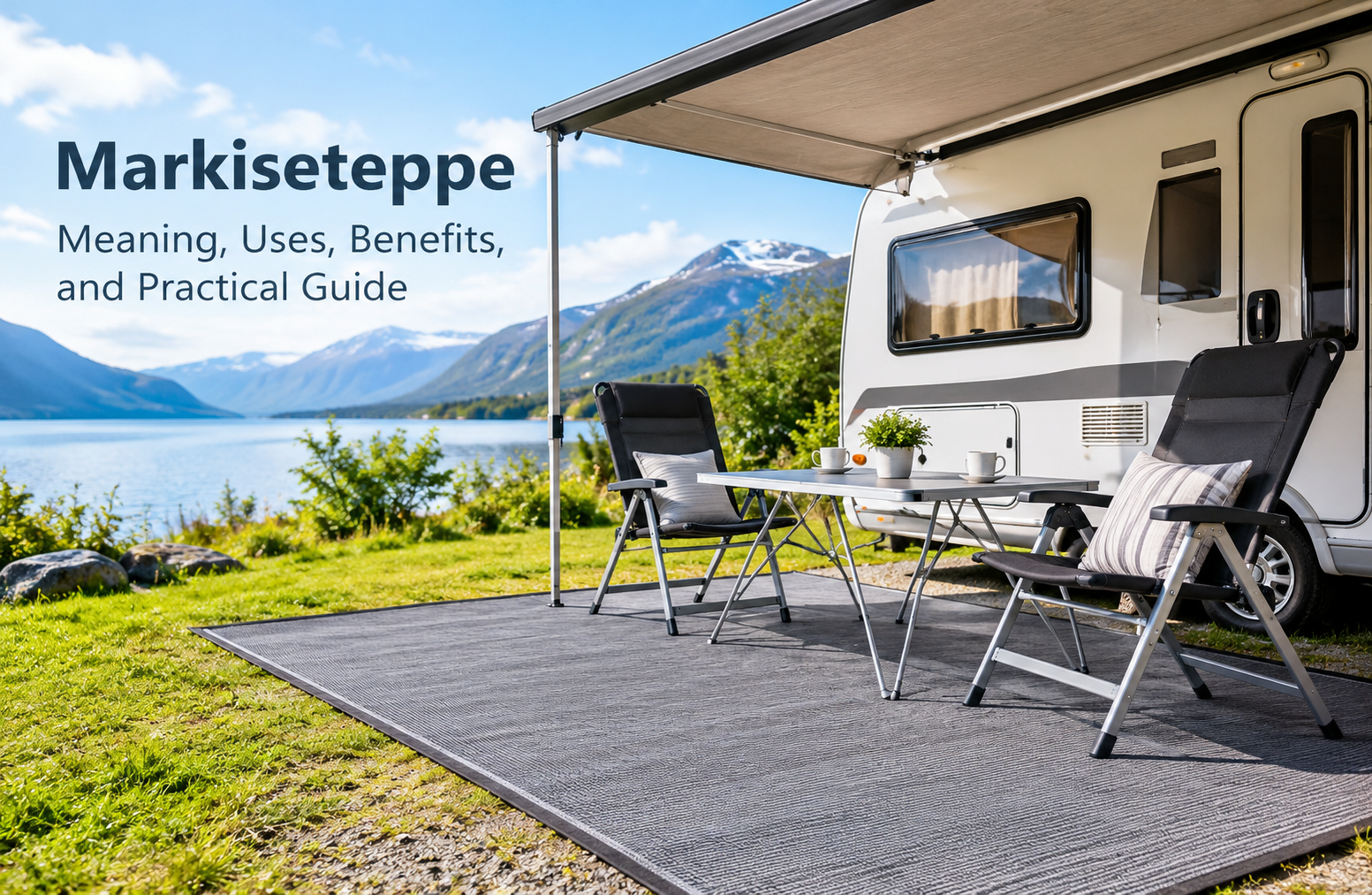
The word Markiseteppe is associated with outdoor comfort, awnings, camping equipment, and practical floor coverings. It combines two Scandinavian word elements: markise, meaning awning, and teppe, meaning carpet or rug. In its most practical sense, it refers to an awning carpet or outdoor mat placed beneath a shelter to create a cleaner, more comfortable surface.
However, the term is not used consistently across every website. Some online articles use it to describe an awning or its fabric, while others use it for the ground covering beneath an awning. Understanding this difference is important when researching products or deciding what to purchase.
Swiss Scope
+1
For homeowners, campers, and caravan owners, the ground-covering interpretation is particularly useful. A suitable outdoor mat can help separate a seating area from damp grass, loose gravel, dust, and everyday dirt. It can also make a temporary outdoor space feel more organized without requiring permanent construction.
The best way to understand this product category is to focus on its intended function rather than its name alone. If a product is described as a breathable, rollable outdoor carpet, it serves a different purpose from a retractable canopy mounted above a window or patio.
This guide explains the meaning of the term, the differences between related products, suitable materials, practical applications, selection criteria, installation, maintenance, common mistakes, and the limitations buyers should understand before making a decision.
Understanding the Different Meanings of Markiseteppe
A major challenge when researching this keyword is that several related outdoor products can be grouped under similar descriptions. Although they share a focus on comfort and weather protection, their construction and intended uses differ.
1. Outdoor carpet beneath an awning
This is the most practical interpretation for camping and caravan use. The mat is spread across the ground beneath an awning, creating a designated area for walking, sitting, eating, and relaxing.
Its main purposes include:
- Reducing the amount of loose dirt tracked into a caravan or tent.
- Creating a more comfortable surface for bare feet and outdoor footwear.
- Helping define an outdoor seating or dining area.
- Providing a cleaner place for chairs, tables, and other camping equipment.
- Allowing people to organize a temporary living area without permanent flooring.
The performance of the mat depends on its weave, thickness, dimensions, drainage, and suitability for the surface underneath it.
2. Awning fabric or shade covering
Some websites use the term more broadly when discussing fabric awnings. These products are installed above windows, doors, balconies, terraces, or patios to provide shade.
An awning can reduce direct sunlight reaching a window or outdoor seating area. Depending on its position, fabric, and design, it may also provide limited protection from light rain.
However, an overhead awning should not be confused with a ground mat. The two products have different installation requirements, weather limitations, and maintenance needs.
3. A complete outdoor living arrangement
In a broader design context, the term may appear alongside outdoor flooring, shade structures, furniture, and decorative accessories.
These elements work together to create a more comfortable exterior space. For example, a caravan awning, outdoor carpet, folding table, and weather-resistant chairs can turn a basic campsite into an organized area for everyday activities.
The important point is that a complete outdoor arrangement is not necessarily one product. It is usually a combination of items selected to meet specific needs.
Why Markiseteppe Matters for Outdoor Living
Outdoor areas often have practical limitations that become noticeable only after regular use. Grass can become muddy, gravel can be uncomfortable underfoot, and bare concrete can feel hard during long periods of sitting or standing.
A suitable ground covering addresses several of these issues at once.
A cleaner outdoor environment
One of the most useful benefits is the creation of a designated clean zone. Dirt and small stones are less likely to spread across the entire seating area when people enter from a grassy or gravel surface.
The benefit is especially noticeable around caravans and motorhomes, where the distance between the outside ground and the interior floor is small.
A mat will not eliminate dirt, but it can make everyday cleaning easier. Shaking it out or brushing away loose debris may take less effort than repeatedly sweeping a larger outdoor area.
Greater comfort underfoot
Hard surfaces can become uncomfortable when people stand for long periods. A suitable outdoor carpet adds a layer between the ground and the feet, making the area more pleasant for ordinary activities.
The amount of comfort depends on the product. Thin woven mats mainly improve surface feel, while thicker materials may provide more cushioning. Neither should be assumed to offer the support of purpose-built outdoor flooring.
A more organized living space
A defined floor area helps separate the seating zone from surrounding ground. This makes a small campsite, balcony, or patio appear more orderly.
It can also help with furniture placement. Chairs and tables are easier to arrange when there is a clearly defined area, although the mat must be appropriate for the weight and feet of the furniture being used.
Easier temporary setup
Many outdoor mats are designed to be rolled or folded after use. This makes them suitable for people who need a temporary floor covering rather than a permanent installation.
Caravan travelers, weekend campers, and people who use their patios seasonally may appreciate this flexibility.
A portable product is particularly useful when storage space is limited, provided its packed dimensions and weight are manageable.
Better separation from rough ground
Loose gravel, uneven soil, and coarse outdoor surfaces can make sitting or walking uncomfortable. A mat creates a more consistent surface, although it cannot correct serious ground unevenness.
The ground should still be checked for sharp stones, exposed roots, holes, and other hazards before the covering is installed.
Materials Used in Markiseteppe Products
Material selection is one of the most important factors affecting performance. Outdoor coverings face sunlight, moisture, dirt, repeated folding, and friction from shoes and furniture.
No single material is ideal for every situation. The best choice depends on where the mat will be used, how often it will be moved, and how it will be stored.
Polypropylene
Polypropylene is a synthetic polymer commonly used in outdoor textiles. It can be made into lightweight fibers that are practical for woven mats.
Potential advantages include:
- Relatively low weight.
- Easy handling and transport.
- Resistance to moisture absorption compared with many natural fibers.
- Straightforward cleaning for many basic outdoor applications.
- Availability in a range of colors and woven designs.
Performance still depends on the quality of the finished product. UV stabilization, weave construction, edge finishing, and manufacturing quality can affect how well a polypropylene mat withstands outdoor exposure.
A low-cost mat should not automatically be assumed to have the same outdoor lifespan as a higher-quality alternative made from a similar material.
Polyester
Polyester is another common synthetic textile used in outdoor products. Depending on its construction and treatment, it can offer useful strength, dimensional stability, and resistance to everyday wear.
Some outdoor carpets and awning fabrics use polyester because it can be manufactured in different weights and finishes.
Buyers should check whether the product is intended for ground contact or overhead use. Polyester fabric designed for a canopy may have different requirements from a woven carpet that must tolerate foot traffic and contact with the ground.
PVC-coated materials
Some outdoor products use PVC-coated textiles or related composite constructions. These materials can provide a surface that is easier to wipe clean and may offer stronger resistance to water penetration.
However, a water-resistant surface is not always the best option for every campsite. If the material is impermeable, water may collect underneath it rather than drain through.
This can be a concern on grass, soil, or wooden decking. A product that blocks water may be more suitable for a specific hard surface, but it still requires appropriate drainage and cleaning.
Acrylic fabrics
Acrylic is commonly associated with outdoor awning fabrics because suitable formulations can provide good color retention and resistance to sunlight.
It is more relevant when the product being researched is an overhead shade covering rather than a ground carpet.
Acrylic awning fabric and a breathable camping mat should therefore be evaluated as different product categories. Their requirements for tension, weather exposure, cleaning, and structural support are not interchangeable.
Natural fibers
Natural fibers can offer an attractive appearance and comfortable texture, but they are not always ideal for prolonged outdoor exposure.
Materials such as untreated cotton, wool, or natural jute may absorb moisture and require more careful drying and storage. Their suitability depends on the particular construction and whether the manufacturer explicitly approves outdoor use.
For camping in changeable weather, a purpose-built synthetic outdoor mat is often a more practical starting point than an indoor rug made from natural fibers.
Choosing the Right Markiseteppe for Different Environments
A product that performs well on a covered balcony may not be the best choice for a campsite with wet grass or loose gravel. Choosing the right covering begins with understanding the environment in which it will be used.
For caravans and motorhomes
Caravan users generally need a mat that is portable, easy to clean, and compatible with the available awning space.
Before buying, measure the usable ground area rather than relying solely on the advertised width of the awning.
Consider the following questions:
- Will the mat fit without extending into a neighboring pitch or shared walkway?
- Can it be rolled and stored in the available vehicle compartment?
- Does the construction allow rainwater to drain?
- Is the surface suitable for regular foot traffic?
- Can it be cleaned and dried before the next journey?
Breathability is especially important when the mat will sit on grass. Some campsites also have rules about ground coverings because certain impermeable materials can damage the grass beneath them.
Checking the campsite’s regulations before purchasing can prevent unnecessary expense.
For tents and camping shelters
Tent areas often experience a mixture of dry dust, moisture, soil, and foot traffic. A ground covering can help keep the entrance and nearby seating area cleaner.
However, a mat intended for use under an open awning is not automatically suitable as a tent footprint.
A tent footprint is generally selected to protect the tent floor and fit its base. An outdoor carpet is selected primarily for comfort and cleanliness. Using the wrong product in the wrong position may trap moisture or interfere with the shelter’s design.
Keep drainage in mind and avoid creating a surface where rainwater can collect around the tent entrance.
For balconies
Balconies benefit from products that fit the available floor area without obstructing doors, drains, or access routes.
A low-profile mat is often practical because it is less likely to catch against a door or create a raised edge. Its backing should also be appropriate for the balcony surface.
On exposed balconies, wind can lift lightweight coverings. Choose a product that can be secured safely without damaging the building or blocking drainage openings.
If the balcony is shared or subject to building regulations, check the applicable rules before adding fixtures or permanent attachments.
For patios and decks
Patios and decks provide a more stable base than many natural campsite surfaces, but moisture management still matters.
A carpet placed on a wooden deck can trap water or debris if its backing prevents airflow. This may slow drying and make regular cleaning more difficult.
For decking, consider:
- A construction that allows water to escape.
- A size that leaves drainage channels clear.
- A backing compatible with the deck finish.
- A surface that does not become excessively slippery when wet.
- Easy removal for cleaning beneath the mat.
The covering should be lifted periodically so that the surface below can be inspected and allowed to dry.
For gardens
Garden use often involves soil, grass, and uneven surfaces. A mat can create a temporary seating area, but it cannot provide the stability of a properly prepared patio.
If the ground is uneven, remove loose debris and choose a reasonably level location before placing furniture on the mat.
For frequent use, a breathable outdoor carpet is generally a more sensible option than a heavy indoor rug that retains water.
How to Choose the Right Size
Correct sizing is essential because a mat that is too small may not cover the intended seating area, while an oversized product can interfere with walkways, neighboring spaces, or drainage.
Measure the usable area first
Measure the length and width of the ground area you actually want to cover.
For a rectangular area, calculate the approximate surface using:
\[ \text{Area}=\text{Length}\times\text{Width} \]
For example, a space measuring 3 metres by 4 metres has an area of 12 square metres.
This calculation gives you a useful starting point, but it does not determine the exact product size. You must also consider the position of furniture, access points, doors, and the boundaries of the space.
Allow room for movement
A mat should make the area more practical, not create obstacles.
Leave enough space for people to walk comfortably around tables and chairs. Avoid placing edges across doorways where they could create a tripping hazard.
For a caravan, check the dimensions of the awning’s usable footprint and confirm that the mat will not extend beyond the permitted pitch area.
Check the manufacturer’s measurements
Product dimensions may describe the material itself rather than the total space needed for installation.
For a ground mat, check its finished length and width. For an overhead awning, examine the projection, mounting width, and required clearance.
These measurements describe different things, so comparing them without understanding the product category can lead to an incorrect purchase.
Installation: A Practical Step-by-Step Guide
A ground-covering product generally requires less installation work than a permanent awning. Even so, preparing the surface properly improves comfort and reduces avoidable wear.
Step 1: Inspect the ground
Remove sharp stones, sticks, and loose debris. Check for holes, standing water, and uneven sections that could affect stability.
Step 2: Confirm the dimensions
Measure the intended area and verify that the product fits within the permitted space. Consider the location of doors, furniture, and drainage routes.
Step 3: Unroll the covering
Spread the mat evenly and allow folds to relax. Position it so that edges lie flat and do not obstruct normal movement.
Step 4: Arrange furniture safely
Place chairs and tables on a stable surface. Check that furniture feet do not catch the weave or cause the covering to bunch up.
Step 5: Check and maintain the setup
Recheck the edges after use, remove accumulated debris, and lift the mat periodically to inspect the surface underneath.
These steps apply to a ground mat. An overhead awning requires a separate installation process, suitable structural fixings, and compliance with the manufacturer’s instructions. Motorized systems and wall-mounted brackets may require professional installation.
Cleaning and Maintaining Markiseteppe
Maintenance has a direct effect on how pleasant an outdoor covering remains to use. Dirt, food residue, trapped moisture, and prolonged sunlight can all affect its appearance and condition.
The appropriate cleaning method depends on the material and the manufacturer’s care instructions.
Routine cleaning
After ordinary use, remove loose leaves, dust, sand, and other debris with a soft brush.
If the product can be washed, use the cleaning method recommended by the manufacturer. Mild soap and water may be suitable for some synthetic mats, but not every coating or backing responds well to the same cleaning products.
Avoid assuming that a pressure washer, bleach, or strong detergent is safe simply because the product is intended for outdoor use.
Drying after rain
If the mat becomes wet, allow it to dry thoroughly before long-term storage.
Where practical, lift it from the ground to improve airflow on both sides. This is particularly important when the surface beneath it is grass, soil, or wood.
Storing a damp covering in a closed bag or vehicle compartment can encourage unpleasant odors and microbial growth.
Preventing stains and odors
Food and drink spills should be cleaned promptly. Organic residue can attract insects and become harder to remove if it remains on the material.
For stubborn stains, test the recommended cleaning method on a small, inconspicuous area first.
Do not mix cleaning chemicals. If the product has a protective coating, abrasive tools or harsh chemicals may damage it.
Seasonal storage
Before storing the mat for an extended period:
- Remove loose dirt and visible stains.
- Wash it only if the care instructions allow.
- Dry it completely.
- Fold or roll it according to the manufacturer’s recommendations.
- Store it in a dry place away from prolonged direct sunlight.
- Check for damage before using it again.
Regular inspection can reveal frayed edges, weakened seams, damaged coatings, or areas where the material has become brittle.
When should a mat be replaced?
Replacement may be appropriate when the material tears easily, the edges become difficult to secure, the surface creates a tripping hazard, or cleaning no longer restores a usable condition.
Small problems may be repairable, depending on the material. However, a repair should not compromise drainage, stability, or safe movement.
Common Mistakes to Avoid
Many problems arise not because an outdoor carpet is inherently unsuitable, but because it is used in conditions for which it was not designed.
Buying based on appearance alone
A color or pattern may complement outdoor furniture, but appearance tells you little about drainage, UV resistance, cleaning requirements, or durability.
Check the specifications before deciding that a product is suitable for regular outdoor use.
Choosing a solid, waterproof mat for every surface
A fully waterproof covering may be useful in some settings, but it can also trap moisture beneath it.
On grass or wooden decking, this can create problems if water cannot escape and the area remains covered for long periods.
Match the construction to the surface and the expected weather.
Ignoring campsite rules
Some campsites restrict particular ground coverings to protect grass and improve drainage.
Check the rules before purchasing or laying a mat. A product that is suitable for a gravel pitch may not be permitted on a grass pitch.
Leaving the covering outside in severe weather
An outdoor label does not mean a product is indestructible.
Strong wind can lift a loose mat, while heavy rain may expose drainage problems. Prolonged sunlight can gradually degrade some materials.
Secure or remove the mat when necessary, following the manufacturer’s guidance.
For overhead awnings, wind presents an even more serious risk because the fabric and supporting structure can create substantial forces. Retract the awning in conditions beyond its specified operating limits.
Storing it before it is dry
This is one of the easiest mistakes to prevent. A damp mat stored tightly for days or weeks may develop odors and become harder to clean.
Allow sufficient drying time before packing it away.
Assuming every product has the same meaning
Because websites use the word Markiseteppe inconsistently, buyers should verify the actual item being offered.
Read the product title, specifications, measurements, installation instructions, and return conditions. Photographs can help, but they should not replace written product details.
Is Markiseteppe Worth Buying?
Whether an outdoor carpet is worth purchasing depends on how often it will be used and what problem it needs to solve.
For someone who camps frequently, the benefit may come from having a cleaner area outside a caravan or tent. For a homeowner, the value may lie in making a patio more comfortable without installing permanent flooring.
A less expensive product may be adequate for occasional use on a sheltered balcony. Frequent travelers or people who leave a covering exposed for extended periods may prefer a more durable material with clear care instructions and suitable UV resistance.
The most useful way to evaluate value is to compare the total ownership experience rather than the initial price alone.
Consider the following:
- Frequency of use: Daily use places different demands on a product than occasional weekend use.
- Expected conditions: Sun, rain, dust, and rough ground affect material requirements.
- Ease of maintenance: A product that cleans and dries easily may save time.
- Storage requirements: Packed size and weight matter when traveling.
- Expected service life: Construction quality and proper care influence durability.
- Replacement cost: A cheaper product may not be economical if it needs frequent replacement.
There is no universal lifespan or guaranteed financial saving that applies to every outdoor mat. Performance depends on its construction, conditions of use, and maintenance.
Markiseteppe Compared With Other Outdoor Coverings
The differences between related products become clearer when they are compared by function.
| Product | Main purpose | Best suited to |
| Outdoor awning carpet | Creates a comfortable ground surface | Caravans, patios, and camping areas |
| Standard outdoor rug | Adds texture and comfort | Balconies, covered patios, and seating areas |
| Tent footprint | Protects the base of a tent | Camping and tent setup |
| Waterproof groundsheet | Separates equipment or occupants from the ground | Situations requiring a moisture barrier |
| Overhead awning | Provides shade above an outdoor area | Windows, doors, patios, and caravans |
| Outdoor deck tiles | Creates a more structured floor surface | Suitable balconies, patios, and decks |
These products are not interchangeable in every situation. For example, a tent footprint may prioritize protection beneath a tent, while a woven awning carpet may prioritize comfort and airflow in the surrounding living area.
Before selecting a product, identify the main task it must perform. That single decision often makes the rest of the selection process much easier.
Environmental and Practical Considerations
Outdoor coverings can improve comfort, but they also introduce material, storage, and maintenance considerations.
Synthetic materials may be durable and easy to clean, yet their environmental impact depends on the material, manufacturing process, transport, lifespan, and disposal options.
A product that lasts longer and is repaired when possible may reduce the frequency of replacement. However, durability claims should be supported by actual product specifications rather than assumptions based on material names.
Buyers can make more informed choices by checking whether the manufacturer provides information about recycled content, repair options, material composition, and end-of-life disposal.
It is also important to protect the surface beneath the covering. A mat should not block drains, prevent necessary airflow, or remain in a position that damages grass or decking.
The most practical approach is to choose a covering designed for the intended environment, inspect the surface regularly, and remove the product when weather or ground conditions make continued use unsuitable.
How to Research and Compare Products Reliably
Because Markiseteppe can refer to different types of outdoor products, reliable research begins with identifying the category.
A useful specialist reference is Isabella’s official website, which provides information about camping and caravan equipment. Manufacturer documentation is especially valuable when you need to verify the intended use, dimensions, cleaning requirements, and compatibility of a specific product.
When comparing alternatives, use the same criteria for each item. Compare the finished dimensions, material composition, weight, drainage characteristics, cleaning instructions, warranty terms, and suitability for the surface where it will be placed.
Be cautious about broad claims that a product will eliminate moisture, withstand every type of weather, or last for a specific number of years without maintenance. Those outcomes depend on the product design and conditions of use.
A careful comparison is more useful than relying on a promotional description alone. It helps you distinguish practical features from claims that have not been established for the particular product.
Frequently Asked Questions About Markiseteppe
1. What does Markiseteppe mean?
Markiseteppe is associated with the Scandinavian words for awning and carpet. In practical use, it commonly refers to an outdoor carpet or mat placed beneath an awning, although some websites use the term for awning fabrics or shade systems.
2. What is a Markiseteppe used for?
It is commonly used to create a cleaner, more comfortable outdoor surface beneath a caravan awning, camping shelter, balcony seating area, or patio. Depending on its construction, it may help reduce dirt, improve comfort, and define a designated living space.
3. Which material is best for an outdoor awning carpet?
The best material depends on the environment. Woven polypropylene can be lightweight and practical for camping, while other synthetic constructions may suit different cleaning and durability requirements. Breathability, UV resistance, drainage, and manufacturer care instructions are important considerations.
4. Can Markiseteppe be used on grass?
Yes, some outdoor mats are suitable for grass, but suitability depends on the product and campsite rules. A breathable design can help water drain and air circulate. Lift the mat periodically to inspect the grass, and avoid leaving unsuitable coverings in place for extended periods.
5. How do you clean Markiseteppe?
Remove loose debris with a soft brush and follow the manufacturer’s cleaning instructions. If washing is permitted, use a suitable cleaning method and allow the mat to dry completely before storage. Avoid harsh chemicals or pressure washing unless the manufacturer confirms they are safe.
6. Is Markiseteppe the same as an awning?
Not necessarily. The term is often used for a ground carpet beneath an awning, while an awning itself is an overhead shade structure. Some websites use the term differently, so check the product description and specifications before purchasing.
Conclusion
Markiseteppe is a useful term to understand when exploring outdoor carpets, caravan accessories, awning systems, and comfortable outdoor living spaces. Although its meaning varies across online sources, it is commonly associated with an outdoor mat placed beneath an awning to create a cleaner and more practical ground surface.
Choosing the right product requires more than selecting an attractive design. Material quality, dimensions, drainage, breathability, cleaning requirements, storage, and the intended surface all influence how well a covering performs.
For camping and caravan use, a lightweight, breathable mat may be a practical choice. For balconies and patios, the priorities may include a suitable backing, easy cleaning, safe edges, and compatibility with the underlying surface. Overhead awnings require separate consideration of mounting, structural support, and weather limitations.
Proper maintenance also matters. Removing dirt, allowing moisture to escape, drying the material before storage, and inspecting it regularly can help preserve its condition and usability.
Ultimately, the most suitable option is the one that matches the intended application, local weather conditions, and practical needs. Understanding these factors makes it easier to distinguish between outdoor carpets and awning systems, evaluate product claims, and make an informed decision.