Brasssmile Com: Website Overview, Features, and Safety Guide
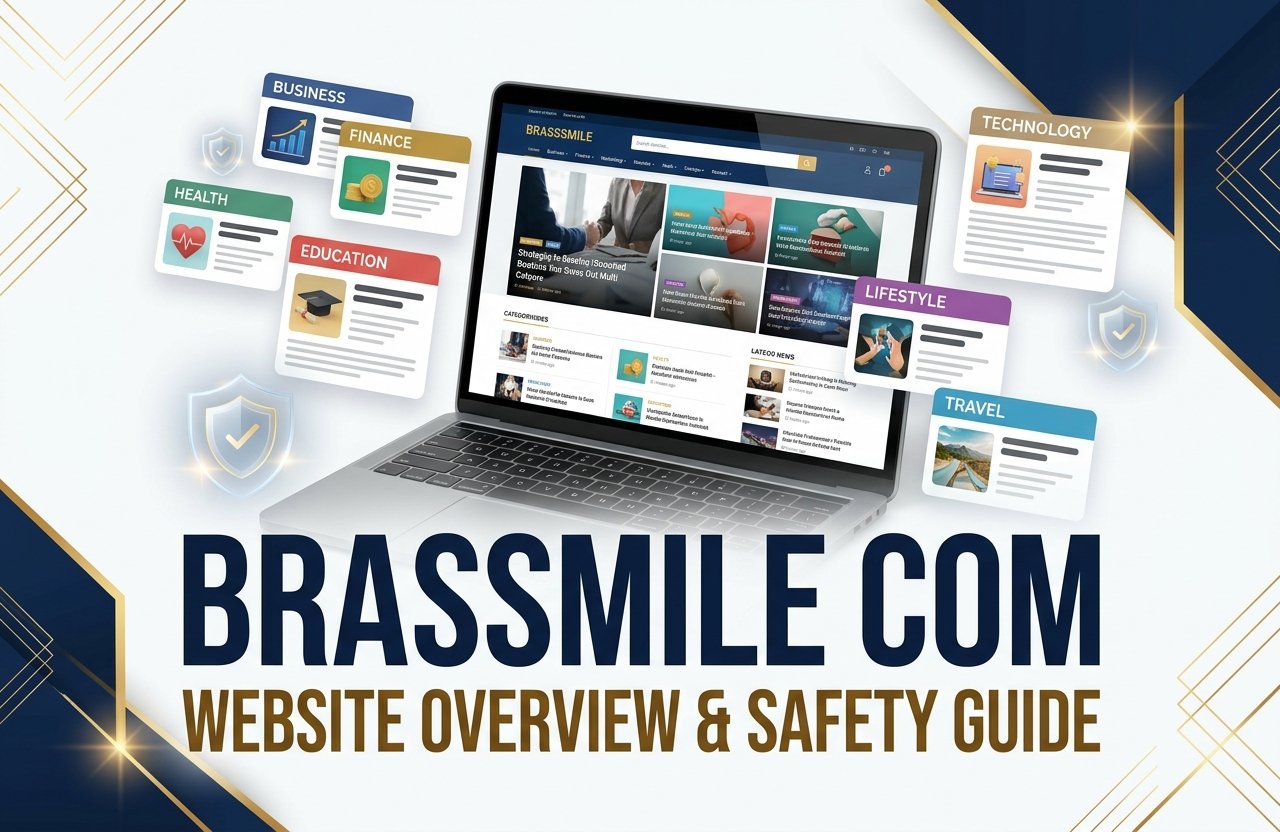
Brasssmile com is a search term that people may encounter when looking for an online information platform, general-interest articles, or details about the Brasssmile website. The name can create some confusion because the word “smile” may suggest dentistry, teeth whitening, or oral health services. However, the website currently presents itself as a broader publishing platform covering several everyday subjects, including business, finance, health, education, technology, lifestyle, and travel.
Understanding what a website actually offers is important before deciding whether it is useful for research, learning, or everyday questions. A name alone cannot establish the purpose of a website, the quality of its information, or the services it provides. Readers should look at the published content, website policies, author information, and supporting evidence before relying on any online resource.
This guide explains what Brasssmile com is, how its content is organized, what benefits readers may find, and which limitations deserve attention. It also explores practical ways to evaluate online information, protect personal data, and distinguish general educational content from professional advice. The goal is to provide a balanced overview based on observable website information rather than unsupported claims about its reputation or performance.
What Is Brasssmile Com?
Brasssmile com refers to Brasssmile.com, a general-interest publishing website that features informational articles across multiple subject areas. Its homepage presents the platform as a place where readers can discover practical stories and explanations about different aspects of everyday life.
Instead of concentrating on one narrow subject, the website covers several categories. This format resembles a digital magazine in which readers can explore different topics from a single location.
The website’s current presentation includes categories such as:
- Business: Articles about business operations, partnerships, entrepreneurship, and commercial topics.
- Finance: Explanations of saving, financial decisions, and related subjects.
- Health: General information about health, wellness, and personal care.
- Education: Content intended to help readers understand learning opportunities and educational topics.
- Technology: Articles about digital tools, technological developments, and their practical applications.
- Lifestyle: Everyday guidance and information related to personal interests and routines.
- Travel: Information intended to help readers explore travel-related questions and decisions.
These categories indicate the website’s broad editorial direction. However, the existence of a category does not automatically establish that every article within it is comprehensive, professionally reviewed, or suitable for making important decisions.
Readers should assess each article individually. A well-written introduction may help someone understand a subject, but complex questions often require additional research or advice from a qualified professional.
Why Are People Searching for Brasssmile Com?
Searches for an unfamiliar domain usually reflect a need for clarification. People may want to know what a website does, whether it is useful, whether it is connected to a particular service, or whether its content deserves their trust.
Several reasons may explain interest in this particular search term.
1. Understanding the website’s purpose
A visitor may discover the domain through a search result, a shared link, or a reference on another website. Before exploring further, the visitor naturally wants to understand what the platform publishes.
The homepage is the most direct starting point because it shows the site’s current categories, featured stories, and general editorial focus.
2. Checking whether it is a dental service
The word “smile” can lead people to associate the name with dentistry, cosmetic procedures, braces, or teeth whitening.
However, the current Brasssmile.com homepage presents a broad publishing platform rather than a dedicated dental clinic or a specialist dental treatment service. Readers should not assume that a website provides clinical services simply because its name sounds related to healthcare.
Anyone seeking dental treatment should verify the provider’s qualifications, services, location, and professional registration where applicable.
3. Exploring different information topics
Some readers prefer websites that cover several subjects rather than requiring a separate publication for every question. A multi-topic platform can provide a convenient starting point for exploring unfamiliar ideas.
For example, someone researching a small business may also want to understand insurance, technology, or financial planning. A general-interest website can make it easier to discover related subjects, although the accuracy and depth of each article still need to be evaluated.
4. Evaluating credibility and usefulness
Visitors may also want to determine whether the information is reliable enough to use in their own research.
This is a sensible concern. Online publishing is accessible to many people, and the quality of published information varies considerably. The most useful approach is to examine the evidence supporting an article rather than judging it solely by its design, writing style, or search ranking.
Main Features of Brasssmile Com
The usefulness of an online publishing website depends on how it organizes information and whether readers can find material relevant to their needs.
A broad collection of subjects
One notable feature of Brasssmile.com is its multi-category structure. Instead of limiting its content to a single industry, the platform brings together several topics that may interest general readers.
This approach can be helpful when a person wants a basic introduction to a subject before exploring specialist resources.
For example, a reader learning about business insurance might first need to understand common policy terms. Someone researching education might need a straightforward explanation of an unfamiliar qualification. A general information article can help establish the vocabulary needed for more detailed research.
The limitation is that broad coverage does not necessarily mean specialist depth. Readers should look for subject-specific expertise when a question requires technical knowledge.
Article-based navigation
The website uses a publishing format in which visitors can browse article titles, categories, summaries, and related content.
This familiar structure makes it easier to scan a page and decide whether an article matches a particular question. Clear headings and useful summaries can also help readers identify relevant sections without reading an entire page.
A practical browsing method is to begin with the category closest to the question, inspect the article title, and then review the opening paragraphs to confirm that the content addresses the intended subject.
Practical information for everyday questions
General-interest websites often focus on explaining concepts in accessible language. This can be valuable for readers who are unfamiliar with a topic or who want a quick introduction before conducting deeper research.
The strongest educational articles do more than define a term. They explain why it matters, describe common problems, identify important exceptions, and help readers understand what to do next.
Whether a specific Brasssmile article meets these standards must be determined by reviewing that article’s content and sources.
An accessible starting point for research
A general publishing platform can help readers discover terminology, related questions, and areas that require further investigation.
For example, an introductory article about saving money might help a reader identify the difference between an emergency fund and a long-term investment. The reader could then consult a more authoritative financial resource before choosing a product or making a commitment.
This distinction is important: an introductory article can support learning without serving as the final authority on a complex decision.
How Brasssmile Com Can Benefit Readers
The potential benefits of a general-interest publishing platform depend on the reader’s purpose and the quality of the material being consulted.
1. Saving time during initial research
When a website organizes articles into clear categories, readers can begin exploring a subject without searching through many unrelated pages.
This can be especially useful when the question is broad. Someone who wants to understand a basic business concept may benefit from an introductory explanation before moving to detailed industry reports or official guidance.
However, convenience should not replace verification. A short article that leaves out important conditions may save time initially but create confusion later.
2. Making unfamiliar subjects easier to understand
Technical language can make even simple ideas difficult for beginners. An accessible article can break down complicated concepts into smaller parts and explain them using familiar examples.
Good educational writing generally answers three questions:
- What does the concept mean?
- Why is it important?
- How might it apply in a real situation?
Readers can use these questions to evaluate the usefulness of any article on Brasssmile com. If the page offers definitions without explanations or practical context, it may be an incomplete resource.
3. Encouraging further learning
Discovering one useful explanation often leads to additional questions. A broad website can help readers identify related subjects and develop a more complete understanding of a topic.
For example, learning about business planning may lead to questions about budgeting, insurance, marketing, or technology. Exploring these connections can help readers organize their research.
The important point is to distinguish between discovering a topic and mastering it. Further study is often necessary when the subject involves professional standards, financial risk, legal obligations, or health decisions.
4. Supporting general knowledge
Readers sometimes browse articles simply to understand something new. They may be curious about a technological development, an educational opportunity, a travel issue, or an everyday financial term.
A multi-topic publication can support this kind of informal learning by making a range of subjects available in one place.
The value is greatest when articles are accurate, clearly written, appropriately sourced, and updated when their information changes.
5. Helping readers identify the right next step
A good informational article should leave the reader better equipped to investigate a question.
That does not mean every article must provide a complete solution. Sometimes the most useful result is recognizing that a subject requires a specialist, an official document, a current price comparison, or a more detailed investigation.
Readers should view Brasssmile.com as a possible starting point for learning, while evaluating each page according to the importance and complexity of the question.
Is Brasssmile Com a Dental Website?
One of the most important points to clarify is the difference between a website’s name and its actual purpose.
Brasssmile.com may sound related to dental care because the word “smile” commonly appears in the names of dental clinics, oral hygiene products, and cosmetic dentistry services. Nevertheless, its current homepage presents a broader informational publication.
There is no sound reason to assume that a general publishing website provides dental examinations, orthodontic treatment, teeth whitening, or other clinical services without specific evidence.
Why the distinction matters
Dental information and dental treatment serve different purposes.
An article can explain common oral hygiene practices, describe how dental procedures work, or outline questions to ask a dentist. It cannot examine an individual’s teeth, assess their medical history, or provide a personalized diagnosis.
Readers looking for treatment should verify the identity and qualifications of the actual healthcare provider. They should also confirm that the provider offers the specific service they need.
Similarly, an article about a health subject should not be treated as a substitute for professional care simply because it appears on a website with health-related categories.
How to interpret health-related articles
When reading a health article on any general-interest website, consider the following:
- Does the article identify a qualified author or medical reviewer?
- Does it provide reliable references for medical claims?
- Is the information consistent with established professional guidance?
- Does it distinguish general education from diagnosis and treatment?
- Does it explain when a reader should seek professional help?
If these details are missing, the article may still provide a useful introduction, but readers should verify important claims independently.
Is Brasssmile Com Legitimate and Safe to Use?
The question of legitimacy needs a careful answer. A website can be accessible and publish articles without having every claim independently verified. Likewise, a professional-looking design does not establish that the publisher is an expert in every subject it covers.
The current website provides evidence that Brasssmile.com operates as an online publishing platform. That observation alone is not enough to establish its overall trustworthiness, the accuracy of every article, or the safety of every possible interaction with the domain.
It is therefore more useful to evaluate the website in separate areas.
Website availability and identity
Begin by checking the exact domain name. Similar names can belong to unrelated websites, and small differences in spelling or domain extensions can lead to different destinations.
The official website is available at Brasssmile.com. Check that the address in your browser matches the intended domain before entering information or following instructions.
A secure HTTPS connection is useful because it encrypts data transferred between a browser and a website. However, HTTPS alone does not prove that the publisher is honest or that its content is accurate.
Transparency about ownership
Trustworthy publishers should make it reasonably clear who operates the website and how readers can contact them.
Useful information may include:
- An identifiable publisher or organization.
- An informative About page.
- Working contact details.
- A privacy policy explaining data collection.
- Editorial policies or standards.
- Author biographies that accurately describe relevant experience.
The current Brasssmile About page contains a placeholder in its ownership description rather than a complete account of the person responsible for the publication. That is a transparency limitation worth addressing. It does not, by itself, prove fraud or malicious intent, but it makes independent assessment more difficult.
Readers should distinguish between a missing detail and evidence of wrongdoing. A cautious conclusion is more appropriate than either declaring a website completely trustworthy or labeling it a scam without sufficient evidence.
Accuracy of published information
A website’s reliability also depends on the quality of its individual articles.
Check whether factual statements are supported by relevant sources, whether statistics include dates and context, and whether claims can be verified elsewhere.
An article about a current regulation, for example, may become outdated after a government changes its rules. A financial explanation may omit important fees or risks. A health article may oversimplify evidence that specialists interpret more carefully.
The more consequential the decision, the stronger the verification should be.
Security and privacy
Before sharing information with an unfamiliar website, determine whether the information is actually necessary.
Reading a public article generally does not require providing sensitive personal details. Be especially cautious if a page unexpectedly asks for financial information, identity documents, account credentials, or payment details.
Use these precautions:
- Check the domain carefully.
- Read the privacy policy before submitting personal information.
- Avoid downloading unexpected files.
- Do not reuse passwords on unfamiliar services.
- Never share verification codes or account recovery details with an untrusted party.
- Leave the page if it displays suspicious redirects or misleading download prompts.
These steps are sensible for any website, including established publications.
How to Use Brasssmile Com Effectively
Readers can get more value from a general-interest website by approaching it with a clear question and a method for checking the information they find.
Step 1: Define the question you want to answer
Before browsing, write down what you need to understand.
A broad goal such as learning about finance can lead to many unrelated articles. A specific question, such as understanding the difference between saving and investing, makes it easier to identify relevant material.
A clear question also helps you decide when an article has provided enough introductory information.
Step 2: Choose the most relevant category
Use the site’s navigation to find the closest matching topic.
For example, a question about business operations belongs more naturally in the business category than in travel or lifestyle. A question about a digital application may fit technology.
This sounds simple, but choosing the correct subject area reduces the chance of relying on an article that mentions a topic only briefly.
Step 3: Review the publication details
Look for the article’s publication date, author, references, and any indication that it has been updated.
These details matter because information changes at different rates. A basic explanation of a longstanding concept may remain useful for years, while an article about software features, insurance policies, or financial rules may require frequent updates.
An old article is not automatically incorrect, but its claims should be checked when circumstances may have changed.
Step 4: Read beyond the headline
Headlines are designed to attract attention and summarize the subject. They do not always reveal the limits of the article’s evidence.
Read the main text and look for explanations, examples, qualifications, and source references. Notice whether the article answers the original question or shifts toward unrelated subjects.
A useful article should make the reader’s understanding clearer rather than merely repeat a search phrase.
Step 5: Verify important claims
When a statement could affect a significant decision, check it against an appropriate primary source.
Depending on the topic, that may be a government website, an official company document, a professional organization, a peer-reviewed study, or a recognized educational institution.
Compare the actual claim rather than just comparing headlines. Two pages may use similar wording while relying on different dates, definitions, or assumptions.
Step 6: Decide whether further expertise is needed
Some questions can be answered through general reading. Others require specialist guidance.
A basic explanation of a business term may be enough for initial learning. A decision about taxes, legal responsibilities, medical treatment, or investment risk generally calls for stronger evidence and, where appropriate, a qualified professional.
This final step helps prevent an introductory article from being used beyond its intended purpose.
Potential Challenges and Limitations
A broad publishing website can be convenient, but its format creates several challenges that readers should understand.
1. Uneven subject expertise
A website that publishes material about many industries may have different levels of expertise across its categories.
Knowledge of travel writing does not automatically establish expertise in medicine, law, financial planning, or cybersecurity. A reader should assess whether the author has relevant qualifications or whether the article relies on appropriate expert sources.
The key question is not whether a publisher covers many topics. It is whether each article demonstrates suitable knowledge of its specific subject.
2. Limited depth
An introductory article may explain a concept without covering all the exceptions, risks, or technical details.
That limitation is not always a problem. Beginners often need simple explanations before they are ready for advanced material. The problem arises when a simplified account is mistaken for a complete professional assessment.
Readers should identify what the article explains and what it leaves unanswered.
3. Outdated information
Digital publications can remain accessible long after their information has become outdated.
This is especially important for:
- Tax rules and government policies.
- Insurance requirements.
- Technology specifications.
- Prices and service availability.
- Health recommendations.
- Travel restrictions and entry requirements.
Always check the date and confirm time-sensitive details through current sources before acting on them.
4. Unclear authorship
An article becomes easier to evaluate when readers know who wrote it and why that person is qualified to discuss the subject.
If an author biography is missing, generic, or difficult to verify, readers have less information available for judging expertise.
This does not establish that the content is false. It means the reader must rely more heavily on source quality, factual consistency, and independent verification.
5. Search results can create confusion
The same keyword may appear in articles that describe a website differently. Some pages may repeat assumptions about the name, while others may rely on direct observations of the actual domain.
This can make it difficult to distinguish verified information from speculation.
The best approach is to prioritize the actual website for claims about its current navigation and published content, then consult independent sources for claims that require outside verification.
6. Broad coverage can make navigation less focused
A multi-topic website may serve different reader interests, but not every visitor will find its full range of categories useful.
Someone seeking specialist guidance may need to move to a dedicated publication or professional service. Someone who wants only one narrowly defined subject may prefer a website with deeper coverage of that subject.
The right resource depends on the question being asked.
Brasssmile Com Compared With Specialist Websites
Understanding the difference between a general-interest publication and a specialist website helps readers choose the right resource.
| Feature | General-interest publication | Specialist website |
| Main purpose | Covers several topics | Focuses on a particular field |
| Typical content | Introductions, guides, and explainers | Detailed field-specific material |
| Reader experience | Broad exploration | Focused research |
| Expertise assessment | Needs to be checked article by article | Depends on the specialist’s credentials and editorial standards |
| Best starting point | General questions and initial learning | Technical or subject-specific questions |
| Main limitation | Depth may vary between topics | Coverage may be narrow |
Neither format is automatically superior.
A specialist website can also publish inaccurate information, and a general-interest publication can produce a well-researched article. The deciding factors are the quality of the evidence, the relevance of the author’s expertise, and the usefulness of the explanation.
For Brasssmile com, the most reasonable approach is to treat the platform as a potential starting point for general reading while evaluating the individual article before relying on its claims.
Practical Ways to Judge Article Quality
Readers do not need advanced research training to identify many common weaknesses in online content. A few consistent checks can make the process more effective.
Look for evidence rather than confidence
Confident language can make an article sound authoritative, but tone is not proof.
If a page makes a numerical claim, look for its source, date, and definition. If it makes a health claim, check whether credible medical evidence supports it. If it describes a legal requirement, identify the relevant jurisdiction and official rule.
Strong articles make their reasoning easier to examine.
Separate facts from opinions
An article may contain factual statements, interpretations, recommendations, and personal opinions. These should not be treated as interchangeable.
For instance, a statement describing how a service works is different from an opinion that the service is the best available option. A recommendation should explain the conditions under which it applies.
Readers benefit from identifying these distinctions before accepting a conclusion.
Check whether the article answers the actual question
An article can be long without being helpful.
A useful page addresses the subject directly, explains important terms, anticipates reasonable follow-up questions, and avoids unnecessary repetition. Its length should support understanding rather than disguise a lack of substance.
Readers can assess usefulness by asking whether they can explain the main point more clearly after finishing the article.
Examine claims about benefits and limitations
Balanced information recognizes that different choices involve trade-offs.
A technology tool may save time but require training. A financial product may offer potential returns but involve risk. A health intervention may help some people but not be suitable for everyone.
When an article describes only benefits and ignores meaningful limitations, additional research is warranted.
Check whether the information is reproducible
For claims involving data, look for the underlying report, study, official record, or clearly described method.
A reader should be able to trace an important factual statement to evidence that can be checked. Unsupported numbers and vague references make that process harder.
Who May Find Brasssmile Com Useful?
The platform’s broad subject coverage means that different readers may approach it with different goals.
Students and general learners
Students and curious readers may find introductory articles useful when they need a simple explanation before studying a subject in greater depth.
The most effective method is to use general articles to establish basic knowledge, then consult textbooks, academic sources, or relevant institutions for more detailed work.
Professionals exploring unfamiliar subjects
A professional may need to understand an issue outside their main area of expertise. A general article can introduce terminology and provide an initial overview.
For decisions involving contracts, regulations, professional standards, or financial exposure, introductory reading should be followed by specialist verification.
Small-business owners
Business owners often deal with several connected subjects, including operations, insurance, budgeting, technology, and customer communication.
A broad information platform may help identify questions that deserve further investigation. However, business decisions should be based on the company’s actual circumstances, current rules, and reliable supporting evidence rather than a generic article alone.
Everyday internet users
People who want to understand a new topic may appreciate accessible writing and straightforward explanations.
For these readers, the primary benefit is discovering information without needing specialist vocabulary. The key is to recognize when a general answer is sufficient and when more authoritative evidence is necessary.
Readers seeking dental information
People who arrive because of the site’s name should first confirm what the specific page actually covers.
If the goal is general oral health education, an appropriately sourced article may offer an introduction. If the goal is diagnosis, treatment, or a personalized dental recommendation, a licensed dental professional is the appropriate resource.
How the Website Could Build Greater Reader Trust
Trust is not established through branding alone. It develops when a publisher consistently provides accurate information, makes its sources visible, corrects errors, and gives readers a clear understanding of its expertise.
Several practices can strengthen the credibility of a multi-topic publication.
Improve author transparency
Author biographies should explain relevant experience without exaggeration. For specialist subjects, the publisher should identify appropriate qualifications or clearly explain how the article was researched and reviewed.
A complete About page should identify the person or organization responsible for the publication rather than leaving generic placeholders.
Provide direct references
Articles should link important factual claims to relevant original sources. References should support the statements being made, not merely lead to loosely related websites.
This is particularly important for health, finance, legal information, and rapidly changing technology.
Maintain an effective correction process
Even careful publishers can make mistakes. What matters is whether errors are corrected transparently.
A clear contact method and a process for reviewing reported inaccuracies can help readers alert the publisher to outdated or incorrect material.
Keep time-sensitive articles current
Articles about changing rules, products, services, and recommendations should be reviewed when new information becomes available.
A publication date and an updated date can help readers understand when a page was last reviewed. The update should reflect a meaningful review rather than a cosmetic change.
Distinguish education from professional services
A publisher should make clear whether it offers general information, sells a product, provides professional services, or operates a service that requires qualifications.
This distinction is especially important when a brand name could create expectations that the actual website does not fulfill.
Avoid unsupported promises
Claims that a website guarantees results, provides expert treatment, or is completely risk-free should be supported by appropriate evidence.
A responsible publication explains what readers can reasonably expect and acknowledges the limits of its information.
These measures benefit both readers and publishers because they make the purpose and reliability of content easier to assess.
Common Mistakes to Avoid When Researching Brasssmile Com
Several simple mistakes can lead to inaccurate conclusions about the website or its content.
Assuming the name defines the service. A name containing the word “smile” does not establish that the website is a dental practice.
Treating every article as equally authoritative. The credibility of one article does not automatically establish the quality of every other article on the same domain.
Confusing availability with trustworthiness. A functioning website is not necessarily a reliable source for every claim it publishes.
Ignoring publication dates. Information that was correct when published may no longer be current.
Relying on search snippets alone. Search summaries can omit important qualifications or present a partial description. Reviewing the original page provides better context.
Assuming a missing detail proves misconduct. Incomplete author information or unclear ownership can justify caution, but it is not conclusive proof of fraud.
Sharing unnecessary personal information. Reading informational content should not require revealing sensitive data without a clear and justified reason.
Using general content as professional advice. High-stakes decisions require evidence and expertise appropriate to the subject.
Avoiding these mistakes makes online research more accurate and reduces the risk of misunderstanding what a website offers.
The Future Value of Multi-Topic Publishing Websites
General-interest publishing platforms continue to serve a useful purpose when they help readers understand complicated subjects in accessible language.
People frequently need information that crosses traditional subject boundaries. A business question may involve technology and insurance. A travel decision may involve budgeting and local regulations. A health question may require understanding terminology before speaking to a professional.
A multi-topic publication can help connect these questions and introduce readers to new areas of knowledge.
However, publishing across many categories also creates editorial responsibilities. Readers need to understand who produced the information, which sources support it, and whether the article is suitable for the intended purpose.
For a website such as Brasssmile.com, long-term usefulness depends not simply on publishing a large number of articles, but on maintaining clear editorial standards and ensuring that each article provides meaningful value.
As online information becomes easier to produce and distribute, readers benefit from publications that prioritize accuracy, transparency, and practical explanations over unsupported claims or repetitive content.
The most valuable general-interest websites help people become better informed. They do not ask readers to accept every statement without question. Instead, they provide a starting point for understanding a subject and make it easier to identify reliable next steps.
Frequently Asked Questions About Brasssmile Com
1. What is Brasssmile com?
Brasssmile com refers to Brasssmile.com, a general-interest publishing website featuring articles about business, finance, health, education, technology, lifestyle, and travel. Its current homepage presents it as an informational platform rather than a single-subject specialist website.
2. Is Brasssmile com a dental clinic?
The current Brasssmile.com homepage presents a multi-topic publishing website, not a dedicated dental clinic. Readers seeking dental treatment should verify the provider’s identity, professional qualifications, and actual services before making an appointment.
3. Is Brasssmile com safe to visit?
The website’s availability does not establish that every page or claim is trustworthy. Check the exact domain, review its privacy policy, avoid suspicious downloads, and do not provide sensitive information without a clear reason. Its overall security and reliability cannot be guaranteed from its public presentation alone.
4. What topics does Brasssmile com cover?
The website’s main categories include business, finance, health, education, technology, lifestyle, and travel. Individual articles may address more specific subjects, so readers should inspect the relevant page to determine whether it answers their question.
5. Can I rely on Brasssmile com for professional advice?
It is reasonable to use general-interest articles for initial learning, but important decisions require appropriate verification. For medical treatment, legal obligations, taxes, or financial decisions, consult reliable primary sources or a qualified professional when necessary.
6. How can I evaluate information published on Brasssmile com?
Check the author’s expertise, publication date, supporting references, factual accuracy, and balance. Compare important claims with authoritative sources, particularly when the information affects health, finances, legal responsibilities, or personal security.
Conclusion
Brasssmile com is best understood as a multi-topic informational publishing website whose current content covers several areas of everyday interest. Its broad structure may help readers discover new subjects, understand unfamiliar terminology, and begin researching practical questions.
However, the website’s name and appearance should not be treated as proof of specialist expertise or professional services. The distinction between general information and qualified advice is especially important when researching healthcare, finance, law, and other subjects where inaccurate information can have serious consequences.
The most sensible approach is to evaluate each article on its own merits. Readers should check authorship, publication dates, references, and the quality of the supporting evidence before relying on important claims. They should also protect their personal information and verify the exact domain when following links.
Ultimately, Brasssmile.com may serve as a starting point for general reading, but its usefulness depends on the relevance and reliability of the specific material being consulted. Careful evaluation allows readers to benefit from accessible online information while recognizing its limitations.